Published: April 26, 2026 at 10:42 am
Updated on April 26, 2026 at 10:45 am

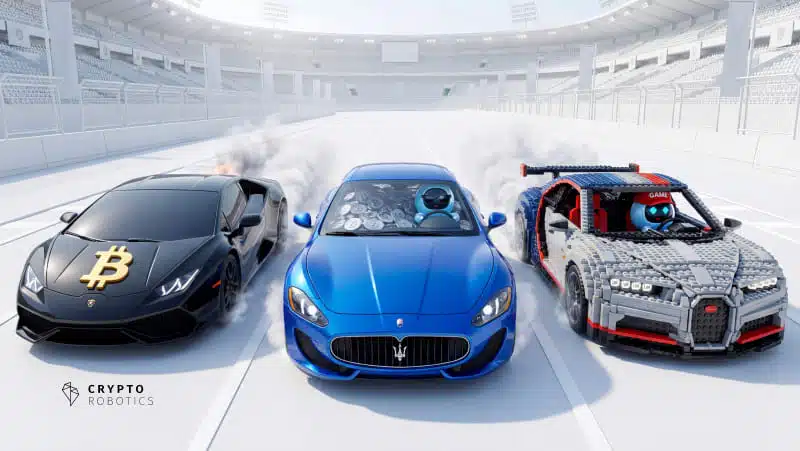


Not all NFTs are built for the same purpose.
That sounds obvious now, but it is still one of the main reasons people misunderstand the market. Many newcomers hear the term “NFT” and imagine one broad category: a digital collectible with a price tag. In reality, the market has split into several very different models, each with its own logic, audience, and risk profile.
Some NFTs are bought for identity and status. Others are designed to unlock access, rewards, or membership. Others function inside game economies, where the NFT is less about display and more about use.
That is why understanding the difference between PFP, utility, and gaming NFTs matters.
This distinction is central to the broader conversation around digital ownership and NFTs. Once digital assets started being used for more than simply collecting, NFT categories stopped being cosmetic labels and became a practical way to understand how value is actually created.
The NFT market is often discussed as if all collections succeed or fail for the same reasons. That is rarely true.
A PFP collection is usually judged by brand strength, cultural relevance, community identity, and secondary-market status. A utility NFT is evaluated more like a product pass, membership layer, or access mechanism. A gaming NFT often behaves like part of an in-game economy, where usability matters as much as scarcity.
If you ignore those differences, you end up analyzing the wrong asset through the wrong lens.
That is one reason broader NFT market trends can look confusing. One part of the market may weaken because speculative profile-picture trading cools down, while another segment grows because gaming integrations or utility-based ownership models become more practical.
PFP stands for “profile picture.”
PFP NFTs are collections primarily designed to function as identity assets, community markers, and status symbols. In most cases, they are visually distinctive avatars that owners use on social platforms, messaging apps, or community channels. Their value usually comes from a mix of scarcity, recognizability, cultural relevance, and social signaling.
A classic PFP NFT is not usually purchased because it unlocks a specific product feature. It is purchased because it represents belonging, visibility, and digital identity. The owner is not just buying an image. They are buying an association with a collection and the status that comes with it.
This is why collections such as CryptoPunks became so important. Their value was never only about aesthetics. It was about historical significance, scarcity, and cultural positioning in the NFT market.
If you want a broader marketplace-level explanation of how NFTs are categorized and used, OpenSea’s guide to what NFTs are is one of the cleaner high-level references.
PFP NFTs usually create value through five factors:
None of these is purely technical. They are market- and culture-driven.
That is why PFP collections are often the most emotionally priced segment of the NFT market. They can become blue-chip assets if they establish symbolic value, but they are also vulnerable to shifts in taste, hype, and market sentiment.
From a buyer’s perspective, a PFP NFT is often closer to a luxury digital brand than to a software product.
Utility NFTs are built to do something beyond simple ownership display.
Their value comes from the benefits attached to holding them. Those benefits can include access to communities, premium features, gated content, event entry, whitelist rights, subscriptions, or ecosystem rewards. In other words, the NFT acts more like a programmable access key than like a status symbol.
That makes utility NFTs easier to evaluate through a product lens.
Instead of asking whether the collection is culturally relevant, buyers can ask more concrete questions: what does it unlock, how often is that benefit used, and would the utility still matter if the NFT stopped being trendy?
This logic overlaps with the rise of dynamic NFTs and sports-linked digital assets, where the asset is not static but connected to evolving conditions, outcomes, or benefits.
Utility NFTs usually create value through:
Unlike PFP collections, utility NFTs are less dependent on pure cultural attention. Branding still matters, but there is at least a second layer supporting demand.
The biggest challenge is credibility. Many projects describe themselves as utility NFTs when the actual utility is weak, delayed, or too vague to matter. That is why the market often discounts “future utility” unless it is already live or clearly believable.
A utility NFT with no meaningful utility is often just a PFP collection trying to sound more durable.
Gaming NFTs are designed for in-game use, ownership, progression, or economic interaction inside a game environment.
These assets can represent characters, weapons, skins, land, resources, passes, or other gameplay-linked items. Unlike a PFP NFT, a gaming NFT is usually not bought primarily for display on social media. Unlike a general utility NFT, it is often tightly tied to a specific game economy or interactive system.
That is what makes gaming NFTs structurally different.
Their value depends not only on scarcity or narrative, but on actual usefulness inside the game. A rare asset only matters if the game itself has users, retention, and demand. If the game loses relevance, the NFT usually loses relevance with it.
This is why NFT gaming and digital asset ownership have always been a more complex segment than many outsiders assume. Gaming NFTs are not just collectibles placed inside games. They are assets tied to design balance, player demand, competitive value, and ecosystem sustainability.
Gaming NFTs usually create value through:
In a strong ecosystem, this can be powerful. Players gain portable ownership, tradable assets, and a reason to stay engaged. In a weak ecosystem, the NFT quickly becomes dead inventory tied to a game with declining demand.
That is why gaming NFTs are often the hardest category to execute well. They require not just branding or community, but an actual game economy that works.
From a technical perspective, gaming NFTs are often easier to understand when you look at how multi-token structures are used in blockchain systems. The official ERC-1155 standard matters here because it was designed to represent multiple token types in one contract, which is especially relevant for game assets and item-heavy ecosystems.
The cleanest way to understand the difference is to ask one question:
What is the main reason people want to own the asset?
For PFP NFTs, the answer is usually identity, culture, and status.
For utility NFTs, it is access, membership, and recurring benefits.
For gaming NFTs, they are used inside a game or an interactive digital economy.
That sounds simple, but it changes everything.
A PFP NFT can survive without deep functionality if the brand remains powerful.
A utility NFT can survive weaker branding if the benefit is real and valuable.
A gaming NFT can survive market noise only if the game remains active and the asset still matters inside it.
Each category has a different dependency stack.
PFP NFTs tend to be more sentiment-driven because their value is closely tied to visibility and social relevance.
That does not make them meaningless. In some cases, symbolic value is extremely durable. Luxury branding works the same way in traditional markets. But it does mean PFP collections usually depend more on narrative than on hard utility.
This is why PFP markets can rise fast and cool off just as fast. Community identity is powerful, but it is also volatile when the broader market shifts.
Utility NFTs usually look more defensible because they can be judged based on what they actually unlock.
If the NFT grants meaningful access, exclusive benefits, or real participation in an ecosystem, the value proposition can remain clearer even when market hype fades. Buyers do not need to believe only in future resale demand. They can also value the experience or product tied to the NFT.
That said, utility can still fail if it is too narrow, too weak, or too dependent on a team that never ships.
Gaming NFTs are usually the most ecosystem-dependent category.
A strong gaming NFT is not just a rare token. It is an asset inside a functioning economy with real players, recurring activity, and reasons for users to care. If the game experience is poor, the NFT layer cannot save it.
This is also why gaming NFTs tend to be judged more harshly by experienced users. People quickly notice when the game exists only to justify the token rather than the other way around.
The categories are useful, but they are not always cleanly separated.
A PFP project may add utility.
A utility NFT may evolve into a status symbol.
A gaming NFT may also function as a community identity asset.
The overlap is real, but the primary value driver still matters most.
For example, many gaming collections borrow PFP-style branding to build identity. Many utility projects use collectible aesthetics to improve market appeal. That does not erase the category difference. It simply means better projects often combine more than one layer of value.
Look at:
Look at:
Look at:
This is where understanding Ethereum token standards also helps. The token standard itself does not tell you whether the asset is good, but it helps you understand how ownership, transferability, and interoperability are structured at the technical level.
That is especially relevant because the official ERC-721 standard established the core model for unique non-fungible assets, which remains central to how many PFP and utility collections are structured today.
There is no universal winner.
PFP NFTs can become extremely durable if they achieve brand-level cultural relevance.
Utility NFTs can remain valuable if the utility is real, active, and difficult to replace.
Gaming NFTs can become powerful if they are tied to games people actually want to play.
What matters most is whether the value driver is real.
A weak PFP collection becomes forgettable.
A weak utility NFT becomes marketing language.
A weak gaming NFT becomes an illiquid game item with no ecosystem around it.
The strongest projects are usually the ones that understand their category clearly instead of trying to imitate every other segment at once.
The NFT market is maturing because users are starting to ask better questions.
Instead of asking whether NFTs as a whole are “still alive,” it is more useful to ask which NFT models are solving real problems. Some are building identity layers. Some are building access systems. Some are building game economies. Those are not the same markets, even if they use similar infrastructure.
That is why the difference between PFP, utility, and gaming NFTs matters so much. It helps separate cultural assets from functional assets and speculative demand from ecosystem-driven demand.
As Web3 keeps evolving, the projects that last will likely be the ones that are easiest to understand on first principles. If users cannot explain why an NFT should hold value beyond hype, the market usually figures that out sooner or later.
PFP, utility, and gaming NFTs all use the same broad technology, but they operate on very different value models.
PFP NFTs are primarily about identity, status, and cultural relevance.
Utility NFTs are primarily about access, rewards, and membership.
Gaming NFTs are primarily about function inside a game economy or interactive ecosystem.
That distinction is not superficial. It changes how demand forms, how risk should be evaluated, and what kind of market each asset belongs to.
The more clearly buyers understand that difference, the easier it becomes to separate real digital ownership models from projects that are only borrowing NFT language without building real value underneath it.
What is a PFP NFT?
A PFP NFT is a profile-picture NFT mainly used for digital identity, social signaling, community belonging, and collectible status.
What is a utility NFT?
A utility NFT is an NFT that provides benefits beyond simple ownership, such as access, membership, rewards, or premium features.
What makes gaming NFTs different?
Gaming NFTs are tied to gameplay, in-game assets, or interactive economies, so their value depends heavily on the quality and activity of the game ecosystem.
Can one NFT be both utility and gaming?
Yes. Some gaming NFTs also provide access, rewards, or status features. The categories often overlap, but one value driver is usually dominant.
Are PFP NFTs more speculative than utility NFTs?
Often yes, because PFP NFTs rely more heavily on culture, attention, and brand relevance, while utility NFTs can also derive value from practical benefits.
Which NFT category is best for long-term value?
There is no single best category. Long-term value depends on whether the project’s core value driver is real, sustainable, and difficult to replace.
Alina Garaeva: a crypto trader, blog author, and head of support at Cryptorobotics. Expert in trading and training.
Alina Tukaeva is a leading expert in the field of cryptocurrencies and FinTech, with extensive experience in business development and project management. Alina is created a training course for beginners in cryptocurrency.
Related Topics
Access the full functionality of CryptoRobotics by downloading the trading app. This app allows you to manage and adjust your best directly from your smartphone or tablet.


News
See more