

Published: April 26, 2026 at 10:18 am
Updated on April 26, 2026 at 10:20 am




Digital assets are easy to copy, easy to move, and easy to repost. That convenience is one of the internet’s greatest strengths, but it also creates a serious trust problem. If an image, collectible, certificate, or token can be duplicated in seconds, how do you prove where it came from, whether it is authentic, and who actually controls it?
That is where digital provenance and ownership verification become essential.
The two concepts are closely related, but they are not identical. Provenance is about history. It answers where an asset originated, how it moved, and whether its record remained intact over time. Ownership verification is about control. It answers who currently holds the asset, which wallet or account can move it, and whether that claim can be checked independently.
These questions matter far beyond NFT hype cycles. They affect digital art, tokenized collectibles, gaming assets, branded media, licenses, certificates, and tokenized real-world property. In the broader shift toward digital ownership and NFTs, provenance is what turns a digital file into a verifiable asset rather than just another copy circulating online.
At its core, digital provenance is the record of an asset’s origin and history.
For a physical painting, provenance might include the artist, gallery records, auction history, and prior owners. In digital environments, the logic is similar, but the evidence looks different. Provenance can include smart contract creation, mint time, creator wallet history, transfer history, metadata structure, storage references, and cryptographic signatures.
This matters because digital files do not carry trust by default. A PNG can be copied endlessly. A video can be reposted without context. A certificate can be duplicated and modified. Provenance creates a chain of evidence that helps distinguish the original record from later duplicates or unverifiable versions.
That is why provenance has become so important in blockchain-based ownership systems. Once markets can trace the history of an asset, they can assign value more confidently to authenticity, rarity, and historical significance. This is especially visible in discussions around NFT market trends, where transparency and verifiable origin increasingly matter more than simple launch hype.
Many people treat provenance and ownership as interchangeable, but they answer different questions.
Provenance asks where the asset came from.
Ownership verification asks who controls it now.
An asset may have strong provenance and weak ownership clarity. It may also have visible ownership and weak provenance. For example, a token can sit in a wallet with a visible holder, yet still point to unclear metadata, questionable authorship, or a poorly documented creation history. On the other hand, a work can have a credible creation trail while the legal or practical ownership rights remain disputed.
This distinction is important because many users still assume that if something is on-chain, everything about it is automatically verified. That is not how it works. A blockchain records state and transfers very well, but it only verifies what is actually recorded. It does not automatically prove every off-chain claim attached to the asset.
The internet made distribution frictionless, but it did not solve authenticity.
For years, digital ownership remained weak because files could be copied without any reliable way to distinguish the original from every later copy. That changed once blockchain-based systems started linking unique identifiers, wallet control, and transfer history to digital items. The market suddenly had a way to track assets rather than just files.
This is one reason NFTs attracted so much attention. They were not only images with price tags. They were a mechanism for attaching a transparent record to a digital asset. To understand that shift properly, it helps to look at Ethereum token standards, because standards such as ERC-721 created a consistent structure for representing unique assets and tracking control over them.
That consistency is what gives provenance practical value. Without a shared structure, history is difficult to trust. With one, provenance becomes portable, readable, and increasingly useful across wallets, marketplaces, and applications.
Provenance is not created by one feature alone. It usually comes from several layers working together.
The most obvious layer is the blockchain itself.
If an asset is minted on-chain, the contract address, token ID, creation event, transfer history, and current wallet holder all become part of the provenance trail. This does not prove every external claim about the asset, but it does create a public record of how it moved within the system.
The ERC-721 standard matters here because it established a standard way to represent unique token ownership and transfer. That consistency is why marketplaces, wallets, and analytics platforms can interpret the same asset in a comparable way.
A token without metadata is usually just a record with an ID.
Metadata gives the asset descriptive meaning: its name, image, media links, attributes, references, and contextual data. That is why metadata design affects trust so directly. If metadata can change silently or break easily, provenance becomes weaker even if the token itself remains visible on-chain.
This is especially relevant in collections where rarity and narrative matter. In the overview of the CryptoPunks collection, historical context and collectible significance are inseparable from the way the assets are interpreted by the market. Provenance is not just technical — it shapes cultural value too.
Ownership verification often depends on wallet signatures.
If a wallet can sign a message, it can prove control over the private key associated with an asset. This is far stronger than screenshots, usernames, or social media claims. In practice, a signed message from the correct wallet is often the most direct way to prove that a creator, treasury, or holder wallet is genuine.
This becomes even more important when identity and access are involved. In ecosystems built around NFT gaming and digital asset ownership, wallet-based verification is not only symbolic. It can determine who can access an item, transfer it, use it, or monetize it.
Not every digital asset lives fully on-chain.
In many NFT systems, the token exists on-chain while the metadata or media is stored elsewhere. That means provenance is partly shaped by storage design. If the asset references files stored through content-addressed systems, integrity becomes stronger because the file is linked to a content identifier instead of a mutable server path.
The IPFS documentation is useful for understanding this logic. Storage design matters because provenance is weaker when the same link can silently change content later.
Ownership verification is not just useful for collectors. It matters wherever digital assets carry value, access, or authority.
In art markets, it helps distinguish the verified holder of a token from everyone else who can copy the image. In gaming, it determines which wallet actually controls an in-game item. In branded NFT ecosystems, it can affect access to communities, utilities, or privileges. In tokenized real-world systems, it can show which wallet holds the on-chain representation of a larger ownership structure.
That is why the issue now extends beyond simple collectibles. In articles covering tokenizing luxury vehicles on blockchain, the value of verification becomes even clearer. Once blockchain records begin representing high-value physical assets or rights tied to them, provenance and ownership verification become part of a broader trust infrastructure, not just a niche NFT feature.
NFT markets made provenance visible to everyday users in a way that earlier digital systems rarely did.
Collectors started paying attention to creator wallets, mint history, collection age, transaction history, metadata stability, and marketplace context. Entire narratives formed around which assets were early, which were authentic, and which mattered because of where they came from.
That is why provenance has played such a major role in blue-chip collections. Value often depends not only on the visual asset, but on the documented history around it. This is also why counterfeit or copycat collections rarely hold up over time. They can imitate visuals, but they cannot reproduce the original mint record and cultural context in the same way.
Marketplace structure also matters here. In broader reviews of how NFT venues operate, such as the Bybit NFT marketplace review, it becomes clear that platforms do more than display assets. They shape how provenance is surfaced, interpreted, and trusted by users.
This is one of the most important distinctions people miss.
Owning a token does not always mean owning copyright, trademark rights, reproduction rights, or commercial rights to the underlying content. Blockchain can verify who controls the token, but it does not automatically define every legal right connected to the media unless the project terms explicitly do so.
The same is true for provenance. A clean on-chain history may show that a wallet owns an NFT, but it does not automatically prove the original minter had the legal right to tokenize that work in the first place.
So when evaluating provenance, there are two different layers:
The first is easier to verify on-chain. The second often depends on licenses, agreements, brand authority, or creator legitimacy outside the chain.
Even strong provenance systems have weak points.
One common mistake is assuming that marketplace display equals proof. Marketplaces are interfaces, not ultimate sources of truth. The stronger approach is always to verify the contract, token ID, wallet ownership, and metadata references directly where possible.
Another weak point is confusing wallet control with authorship. A wallet may control the asset now, but that does not always prove that it created the original work. That is why mint history and creator identity matter so much.
Metadata mutability is another risk. If the descriptive layer can be changed without transparency, provenance becomes less trustworthy even when the token history is visible.
This is particularly relevant in evolving asset models. In discussions around dynamic NFTs and sports-linked digital assets, the flexibility of the asset can be a feature, but it also means buyers need clearer expectations around what may change and what remains fixed.
The logic behind provenance extends much further than collectible markets.
As digital systems move toward portable identity, tokenized credentials, branded assets, and machine-verifiable records, provenance becomes part of how trust works online. This is already visible in frameworks such as the W3C Verifiable Credentials Data Model, which focuses on claims that can be cryptographically checked instead of merely asserted.
That same logic is beginning to matter in AI-era content, creator verification, enterprise records, and tokenized ownership of physical items. When an asset is valuable, transferable, or reputation-sensitive, provenance becomes increasingly important.
Anyone evaluating a digital asset should think about provenance in layers.
First, verify the contract and token standard. If the contract is unclear, everything built on top of it becomes harder to trust.
Second, check the mint history and whether the creator identity is consistent across official channels.
Third, examine metadata stability. If the asset depends heavily on off-chain storage, understand where that data lives and whether it is likely to remain available.
Fourth, separate token ownership from broader rights. The token may be authentic even if legal assumptions around usage are wrong.
Fifth, evaluate the asset in the market context. Patterns visible in NFT market trends often show that long-term value tends to favor projects with stronger transparency, clearer provenance, and more credible ownership structures.
Digital provenance is becoming more important, not less.
As AI-generated content becomes easier to produce and digital assets become more valuable, the ability to verify origin, authorship, and ownership will matter far more than it did in the earlier internet. In that environment, provenance is not a niche feature. It becomes part of the digital trust infrastructure.
That does not mean every future system will use NFTs. Some will rely on credentials, registries, signatures, or hybrid models. But the direction is clear: digital systems are moving toward stronger evidence layers for authenticity and control.
The ecosystems that perform best over time will likely be the ones that make verification clearer, more portable, and less dependent on trust in centralized intermediaries.
Digital provenance and ownership verification sit at the center of the modern digital asset economy.
Provenance explains where an asset came from and how its history can be traced. Ownership verification explains who controls it now and whether that claim can be tested independently. Together, they transform digital assets from mere files into verifiable records of origin, transfer, and control.
That is why these concepts matter so much in NFTs, gaming, tokenized assets, branded ecosystems, and digital identity systems. The internet no longer needs only distribution. It needs trust layers that can survive copying, manipulation, and scale.
In the long run, the most valuable digital assets may not be the ones that look the most impressive. They may be the ones whose origin and ownership can be verified with the least ambiguity.
What is digital provenance?
Digital provenance is the record of where a digital asset came from, how it was created, and how it moved over time.
Is provenance the same as ownership?
No. Provenance tracks origin and history, while ownership verification confirms who currently controls the asset.
Why is provenance important for NFTs?
Because NFTs derive much of their value from authenticity, mint history, creator legitimacy, and transparent transfer records.
Does owning an NFT mean owning the copyright?
Not always. NFT ownership usually proves control over the token, but legal rights depend on the project’s licensing terms.
How can ownership be verified?
Ownership is usually verified by checking the current wallet holder on-chain and, when needed, confirming wallet control through a cryptographic signature.
Why does storage matter for provenance?
Because if metadata or media is stored poorly or changed without transparency, the asset’s authenticity and long-term trust can weaken even if the token remains on-chain.
Alina Garaeva: a crypto trader, blog author, and head of support at Cryptorobotics. Expert in trading and training.
Alina Tukaeva is a leading expert in the field of cryptocurrencies and FinTech, with extensive experience in business development and project management. Alina is created a training course for beginners in cryptocurrency.
Related Topics







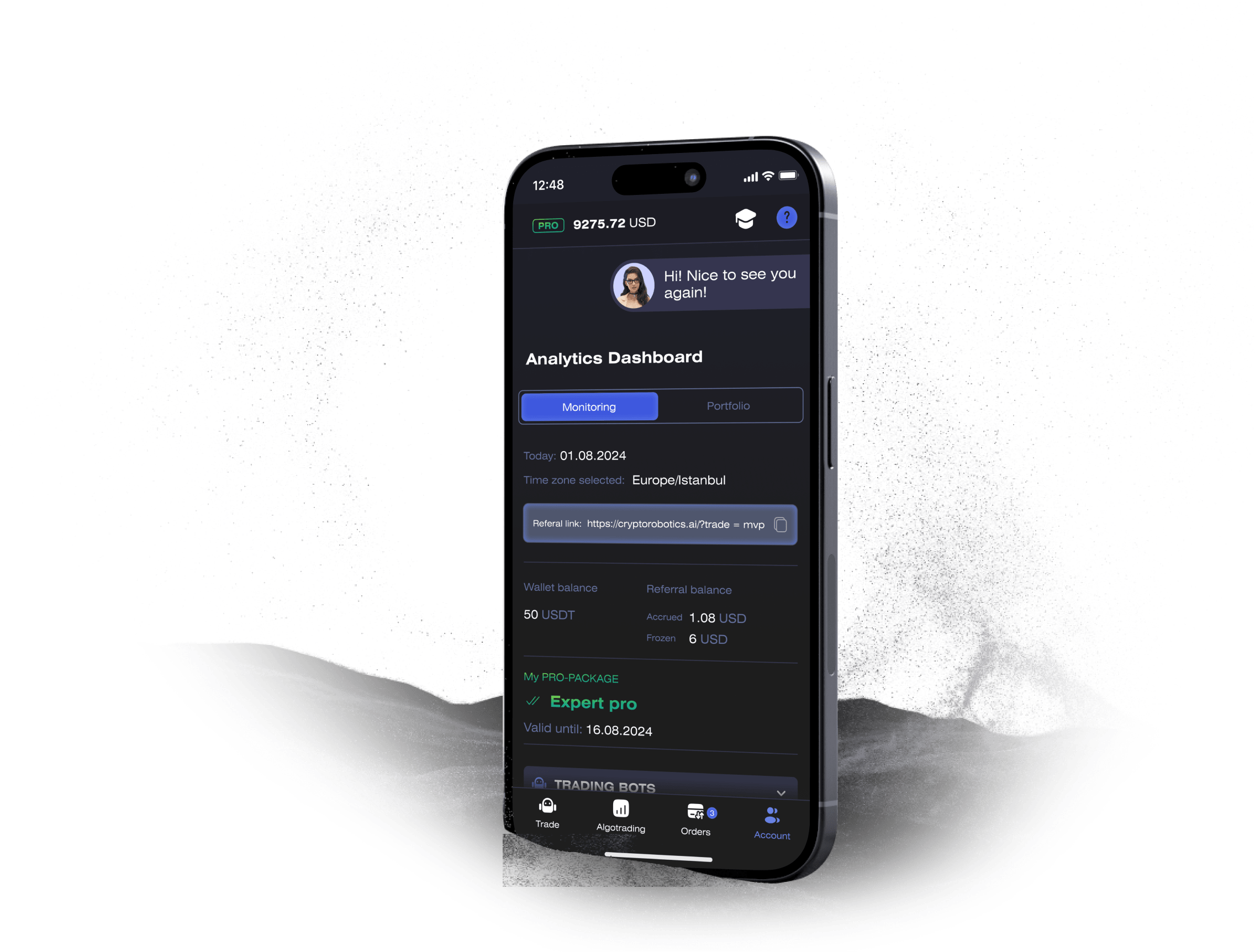
Access the full functionality of CryptoRobotics by downloading the trading app. This app allows you to manage and adjust your best directly from your smartphone or tablet.

News
See more