Published: April 26, 2026 at 9:12 am
Updated on April 26, 2026 at 10:19 am

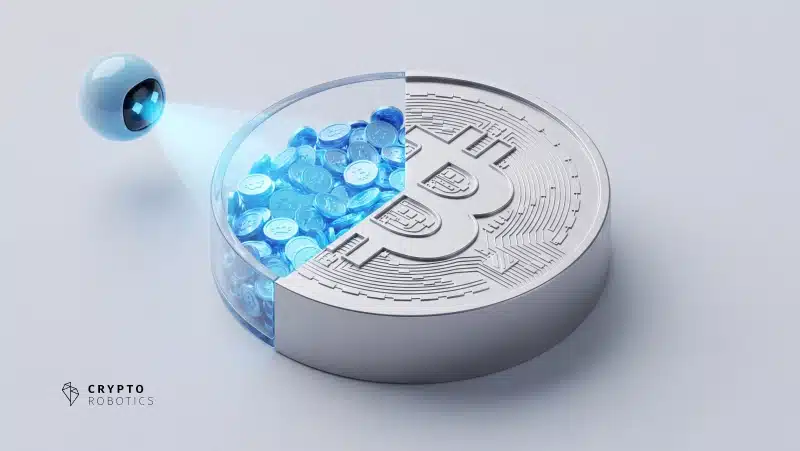


NFTs were originally framed as digital assets with a single owner. That made sense in the early phase of the market, when attention was focused on one-of-one artworks, limited collectibles, and prestige collections. But as some NFTs became significantly more expensive, one problem became obvious: many assets were simply too costly for most buyers to own outright.
That is where NFT fractionalization comes in.
Instead of requiring one buyer to purchase one entire NFT, fractionalization makes it possible to divide exposure to that asset into smaller units. In practical terms, one expensive NFT can be turned into many tradable shares, giving a broader group of participants access to the same asset class. This idea fits naturally into the broader shift toward digital ownership and NFTs, where blockchain-based assets are treated not just as collectibles but as programmable forms of ownership.
The concept sounds simple, but the mechanics matter. Fractionalization changes more than the entry price. It changes how NFTs behave in the market, who they attract, how liquidity works, and what kind of legal and governance questions start to matter.
At the most basic level, NFT fractionalization is the process of turning one NFT into many smaller ownership units that can be bought and sold separately.
That does not usually mean the original NFT is literally broken apart on-chain. In most cases, the NFT is locked in a smart contract or vault. That contract then issues fungible tokens representing fractional interests in the underlying asset. The NFT remains unique, while the ownership exposure around it becomes divisible.
To understand why that structure works, it helps to look at Ethereum token standards. NFTs are typically based on ERC-721 logic, which defines unique non-fungible tokens, while fractional shares are often issued using fungible token mechanics. The original ERC-721 standard established the foundation for unique digital assets, which is exactly why fractional models need a separate layer for share-like exposure.
That distinction is important. When people buy fractional NFTs, they are often not buying direct one-wallet, one-token ownership in the traditional collectible sense. They are buying a structured claim tied to an NFT that remains locked in a contract.
Most fractional NFT models follow a fairly predictable process.
First, the original NFT is deposited into a smart contract. That contract acts as the custodian of the asset. Next, the contract mints a fixed supply of tokens that represent shares in the NFT. Those shares can then be distributed, sold, or traded on supported markets.
In practical terms, the structure often looks like this:
This is why fractional NFTs are better understood as a financial structure built around an NFT, rather than as a new token standard by themselves. The underlying asset remains singular. What changes is the market access.
For readers who want a simple technical overview of this mechanism, fractional NFTs explained gives a useful summary of the standard vault-and-fractions model.
The clearest advantage is accessibility.
If one NFT is worth six figures, the number of realistic buyers is very small. Once that same asset is divided into smaller units, participation becomes possible for a much larger group. That is one reason fractionalization gained attention so quickly: it reduced the capital barrier without removing exposure to high-profile assets.
It also fits broader NFT market trends, especially as the market matured beyond hype-driven launches and started looking for structures that could improve liquidity and widen participation. Fractional ownership appealed to both collectors and speculators because it turned an illiquid object into something closer to a tradable market instrument.
Liquidity is the second major attraction.
A whole NFT may be difficult to sell because it requires one buyer ready to pay the full price. Fractions are easier to move because smaller positions attract more participants. In theory, this can improve price discovery, since the market gets more frequent signals about what people are willing to pay.
That does not mean liquidity is guaranteed. But it does mean fractionalization gives expensive NFTs a better chance of being actively traded instead of simply being held and occasionally listed.
Fractionalization does not just lower the entry point. It changes the economic character of the NFT itself.
A standard NFT often trades infrequently. Because of that, pricing can be opaque, sporadic, and heavily sentiment-driven. Once an NFT is fractionalized, the market starts generating more transaction data through the trading of shares. That can make the asset feel more continuously priced, almost like a financial instrument rather than a static collectible.
This is where the idea becomes more controversial.
Some people see fractionalization as a natural evolution of digital ownership. Others see it as over-financialization. Both views have a point. The more tradable the fractions become, the more the NFT starts behaving like an asset people speculate on in smaller units, rather than something held for art, community status, or utility.
That shift matters because it changes the type of buyer the market attracts. A collector may care about provenance, rarity, and cultural value. A fraction buyer may care mostly about price movement, liquidity, and exit timing.
This is the most obvious use case.
When a single NFT becomes too expensive for ordinary market participants, fractionalization offers a way to open access. Instead of one buyer purchasing the whole asset, many buyers can hold pieces of the value.
That does not mean all high-value NFTs should be fractionalized. In some cases, the cultural appeal of a collection depends partly on concentrated ownership. But for assets priced far above typical collector budgets, the model is intuitive.
Fractionalization also supports shared ownership models.
A group of collectors, a DAO, or an investing community may want exposure to an NFT without assigning full control to one wallet. In that setup, fractionalization becomes less about affordability for individuals and more about coordination across multiple stakeholders.
This is one reason the concept overlaps with broader Web3 governance patterns. Once an asset is structured as tradable fractions, questions about voting, buyouts, treasury logic, and collective decision-making become much more important.
The model may become even more relevant in NFT gaming and digital asset ownership, where certain rare assets can become too expensive for average participants but still matter inside an ecosystem. In that context, fractionalization can expand access to value, although it also raises a practical question: if the NFT has actual utility, who gets to use it when ownership is split?
That question is one reason utility-heavy NFTs are not always ideal candidates for fractionalization. Economic access is easy to divide. Functional access is often not.
The same ownership logic becomes even easier to understand when it is applied outside traditional NFT art. CryptoRobotics touches on that dynamic in its article about tokenizing luxury vehicles on blockchain. Even though that example goes beyond classic profile-picture NFTs, it shows the same basic appeal: expensive assets become easier to access when value is split into smaller units.
This is still the strongest argument in favor of the model.
High-value NFTs can be inaccessible by design. Fractionalization changes that by allowing smaller capital allocations. That does not make the asset cheap, but it makes participation possible for more people.
Because fractions can trade more often than a whole NFT, the market may get a clearer view of how demand is changing over time. That can reduce the “one sale defines everything” problem that often affects rare NFTs.
Fractionalization allows investors to spread exposure across multiple assets instead of concentrating all capital into one NFT. This matters for anyone treating NFTs as part of a broader digital asset strategy rather than as isolated collectibles.
For a broader technical view of how NFT infrastructure works, NFT ownership and market structure offers additional context on how unique assets are represented and traded across ecosystems.
Fractionalization sounds democratic, but it introduces real complications.
If many wallets own fractions of one asset, someone eventually has to decide what happens next. Should the asset be sold? Can one buyer make an offer for the whole NFT? What percentage of fraction holders must approve it?
These questions can become messy fast. Without clear governance rules, shared ownership can create deadlock instead of flexibility.
Fractionalization can improve tradability, but only if real demand exists for the fractions. If the market for those tokens is thin, holders may discover that they own “accessible exposure” that is still hard to exit.
This is one of the biggest gray areas.
The more an NFT is fractionalized, marketed, and traded like an investment product, the more it begins to resemble something regulators may scrutinize differently from a plain collectible. That does not mean every fractional NFT is automatically a security. But it does mean the structure can raise more legal questions than a standard NFT sale.
If an NFT grants access, voting power, membership, or in-game functionality, splitting economic ownership may not split actual use in a clean way. One wallet can usually connect to the application. Thousands of fraction holders cannot all use the same NFT in the same way at the same time.
That is why some of the best use cases remain collectible or financial, not necessarily utility-intensive.
Fractionalization makes the most sense when an NFT has at least three characteristics:
It makes less sense when the asset’s value depends primarily on exclusive utility, direct control, or personal prestige tied to whole ownership.
In other words, not every NFT improves when it becomes fractional. Some become more liquid and accessible. Others simply become more complicated.
NFT fractionalization is one of the clearest signs that the NFT market has moved beyond simple collectible logic.
It reflects a bigger change in how digital assets are being treated: not only as unique tokens, but as ownership structures that can be redesigned for access, liquidity, and shared participation. That can be powerful. It can also be risky.
At its best, fractionalization opens expensive assets to a broader market, improves price discovery, and creates more flexible ways to participate in digital ownership. At its worst, it adds complexity, weakens clarity around rights, and turns cultural assets into over-engineered trading vehicles.
That is why the concept matters. It forces the market to answer a deeper question: is the NFT meant to be collected, used, governed, or simply traded?
The answer determines whether fractionalization is a useful innovation or just another layer of financial packaging.
What is NFT fractionalization?
NFT fractionalization is the process of locking one NFT in a smart contract and issuing smaller tradable tokens that represent fractional exposure to that asset.
Do fractional NFT buyers own the NFT directly?
Usually not in the traditional one-wallet sense. They typically own shares or claims tied to the NFT, while the original token remains locked in a contract.
Why do people fractionalize NFTs?
Mostly to improve accessibility and liquidity, especially when the original NFT is too expensive for most buyers to purchase outright.
They can be, because smaller units are easier to trade than an entire high-value NFT. But liquidity still depends on market demand.
Are there risks in NFT fractionalization?
Yes. The biggest ones include weak liquidity, unclear governance, legal uncertainty, and confusion around what rights fraction holders actually have.
Does fractionalization make sense for every NFT?
No. It tends to work better for expensive collectible assets than for NFTs whose main value comes from exclusive utility or direct control.
Alina Garaeva: a crypto trader, blog author, and head of support at Cryptorobotics. Expert in trading and training.
Alina Tukaeva is a leading expert in the field of cryptocurrencies and FinTech, with extensive experience in business development and project management. Alina is created a training course for beginners in cryptocurrency.
Related Topics








Access the full functionality of CryptoRobotics by downloading the trading app. This app allows you to manage and adjust your best directly from your smartphone or tablet.


News
See more