


Published: May 31, 2026 at 7:39 am
Updated on June 05, 2026 at 7:46 am




Mean Reversion Conservative and Mean Reversion Risky are two crypto mean reversion trading bot options available on the CryptoRobotics platform. Both are USDT futures bots, both work in Long mode, and both use a payment model of 20% from profit.
These bots are not built around AI prediction, abnormal volume, or volatility-breakout logic. Their strategy is based on mean reversion, which focuses on price deviations from the norm and the possibility that the market may return to a more balanced level after strong movement.
The two bots share the same strategic foundation, but they are designed for different user profiles. Mean Reversion Conservative focuses on fewer, higher-quality trades. Mean Reversion Risky is more active and aims to capture more frequent market imbalance opportunities.
For users who are still building a foundation in trading strategy types, the CryptoRobotics entry-level guide to crypto trading approaches can be useful before comparing conservative and active futures bots.
Mean Reversion Conservative and Mean Reversion Risky are futures bots on CryptoRobotics. Both are shown as USDT bots, both use Long mode, and both support Binance Futures, Bitget Futures, Blofin Futures, Bybit UTA Futures, and Demo Futures.
The two bots also have the same payment model: 20% from profit. This means the fee structure is presented as performance-based. However, users should not treat this as a guarantee of profitable trades or stable future results.
Mean Reversion Conservative shows an AVG monthly profit of 8.41%. Mean Reversion Risky shows an AVG monthly profit of 6.33%. These are displayed platform metrics and should be understood as product information, not as fixed income expectations.
Both bots include Test and Connect buttons. This is important because users can review the bot before connecting it to a futures environment. Since these are futures tools, testing and careful setup should be treated as part of the decision process.
A mean reversion strategy is based on the idea that prices can move away from a normal or average level and later return toward that level. In trading, this concept is often used to identify temporary market deviations that may create entry points.
Interactive Brokers describes the long-term average behavior in finance as a concept where a variable tends to return to its long-term mean over time. In crypto futures trading, this idea can be applied to price deviations, volatility, and market imbalance.
A crypto mean reversion trading bot uses predefined logic to identify these deviations. Instead of chasing every price move, it waits for specific conditions. The goal is to enter when the market has moved far enough from the norm to create a potential reversion setup.
This does not mean that every deviation will reverse. Markets can continue moving in one direction for longer than expected. That is why mean reversion bots need risk controls, position sizing, leverage discipline, and a clear understanding of when the strategy may not work.
Mean Reversion Conservative is described as a conservative hedge tool focused on trade quality rather than quantity. It waits for fundamentally strong and high-probability market deviations, aiming to execute fewer but more precise trades.
This bot uses the same advanced Mean Reversion algorithm as Mean Reversion Risky, but it is configured for more significant deviations. The idea is that each trade should be more justified and protected, even if this reduces the number of trading opportunities.
The bot is presented with a low-risk profile. This should be read carefully: in futures trading, “low-risk” does not mean risk-free. It means the bot is configured to wait for more selective conditions rather than entering more frequently.
Mean Reversion Conservative averages around 10 trades per month. Its usage recommendations include optimal leverage X5, an investment horizon from several months, and diversification across 10 pairs, although the list of pairs may change.
Mean Reversion Risky is described as a hedge tool designed to profit from market imbalances. It uses a Mean Reversion algorithm with predictive liquidations and opens only long positions during periods of strong price deviation from the norm.
The bot aims to capture the “first wave” of deviations. This first wave is described as the most frequent one, which supports higher activity and potential profitability. As a result, Mean Reversion Risky is more active than the Conservative version.
Mean Reversion Risky averages around 35 trades per month. Its usage recommendations include optimal leverage X3, an investment horizon of several months, and diversification across 7 pairs, with the list subject to change.
The strategy may have no trades during calm “green” months. This should not automatically be seen as a problem. It is part of the strategy logic because the bot is designed to act when market imbalance conditions appear.
Mean Reversion Conservative and Mean Reversion Risky are built around the same broad concept, but they serve different trading styles. Conservatives prioritize trade quality and patience. Risky focuses on higher activity and more frequent deviation capture.
| Feature | Mean Reversion Conservative | Mean Reversion Risky |
| Strategy style | Quality-first deviation selection | More active imbalance capture |
| AVG monthly profit | 8.41% | 6.33% |
| Payment model | 20% from profit | 20% from profit |
| Trading mode | Long | Long |
| Average activity | 10 trades per month | 35 trades per month |
| Optimal leverage | X5 | X3 |
| Diversification | 10 pairs | 7 pairs |
| Main profile | Portfolio anchor | Volatility-focused tool |
| Entry logic | More significant deviations | First wave of deviations |
The Conservative bot may be more relevant for users who value predictability and are willing to wait for quality entry points. The Risky bot may be more relevant for users who want a more active tool designed around market imbalance and volatility.
Both Mean Reversion bots support Binance Futures, Bitget Futures, Blofin Futures, Bybit UTA Futures, and Demo Futures. This gives users several futures environments to choose from, depending on their exchange access, account type, and testing preferences.
Demo Futures is especially important for users who want to study the bots before live trading. Futures automation can involve leverage and fast market movement, so testing the interface and strategy behavior is a practical first step.
Users comparing futures and spot tools can review the CryptoRobotics breakdown of spot and futures trading conditions. This helps explain why futures bots need different risk expectations than spot-based automation tools.
These Mean Reversion bots are not Long&Short systems. They are Long-mode futures bots. That means their logic is focused on long entries after strong deviations, rather than opening both long and short positions across all market phases.
Long-only mean reversion logic is different from trend-following or Long&Short futures strategies. Instead of shorting downtrends or following momentum, these bots look for strong deviations where a long entry may become relevant.
For Mean Reversion Conservative, this means waiting for higher-probability deviations before entering. The strategy sacrifices trade frequency to improve signal quality. This makes the bot more selective and more suitable for users who do not want constant trading activity.
For Mean Reversion Risky, Long-only logic is combined with predictive liquidations and the goal of capturing the first wave of deviation. It is more active, but still does not mean the bot opens both long and short trades.
This distinction is important because a Long-only futures bot can suffer during prolonged downtrends. If the market continues falling instead of reverting, long entries may face drawdown or liquidation pressure if risk is not managed properly.
Mean Reversion Conservative has an optimal leverage recommendation of X5. This may look higher than the X3 recommendation for Risky, but the Conservative bot is designed to trade less frequently and wait for more significant deviations.
Mean Reversion Risky has an optimal leverage recommendation of X3. This lower leverage recommendation is paired with higher trading activity. Since the bot averages around 35 trades per month, the setup is more active and should be managed with careful exposure control.
Leverage should never be treated as a simple profit multiplier. It increases both potential gains and potential losses. Coinbase explains maintenance margin and liquidation events in perpetual futures, including how positions can be closed when margin requirements are no longer met.
CryptoRobotics also has educational material on managing forced closure risk in crypto futures. This topic is directly relevant for users considering leveraged futures bots, including both Conservative and Risky versions.
Mean Reversion Risk specifically mentions predictive liquidations. This is one of the key points that separates it from the Conservative version. The bot attempts to identify strong deviations from the norm and use these periods as long-entry opportunities.
Liquidation-driven market movement can create sudden price dislocations. In some cases, forced selling or forced closing can push the price away from a balanced level. A mean reversion system may try to identify when that movement becomes excessive.
However, predictive liquidation logic should not be understood as a guaranteed signal. Liquidations can intensify a move rather than immediately reverse it. If the market remains under pressure, a long-only strategy may still experience losses.
This is why the Risky bot is more suitable for users who understand volatility and can tolerate higher activity. It is designed to profit from market imbalances, but those imbalances do not always resolve quickly or predictably.
Mean Reversion Conservative is described as suitable for investors seeking a reliable “anchor” in their portfolio. This wording is important because it positions the bot as a more patient tool focused on stability, selectivity, and quality entry points.
The bot waits for more significant deviations and averages around 10 trades per month. That lower trading frequency may appeal to users who prefer fewer decisions and more selective automation rather than constant bot activity.
Its diversification recommendation covers 10 pairs, although the list may change. Diversification can help reduce dependence on one market pair, but it does not remove futures risk. A diversified futures bot can still face losses during broad market stress.
The investment horizon is several months. This means users should not evaluate the Conservative bot only by short-term behavior. A strategy that waits for ideal conditions may require patience before its logic becomes visible through trading activity.
Mean Reversion Risky is designed for users seeking a more powerful tool to profit from volatility. It averages around 35 trades per month, which makes it significantly more active than the Conservative version.
The bot aims to capture the first wave of deviations. This can support higher activity because the first wave is described as the most frequent deviation stage. However, higher activity also means users should pay closer attention to performance, market conditions, and risk exposure.
Its diversification recommendation covers 7 pairs, and the investment horizon is from several months. This means the bot is still not designed as a short-term experiment. It should be evaluated over a longer period and across different market phases.
The strategy may have no trades during calm “green” months. This is not necessarily a failure. It means the bot is waiting for the type of market imbalance that fits its algorithmic logic.
The main benefit of these bots is strategy clarity. They are not generic futures bots. They are built around mean reversion, price deviation, and market imbalance. This gives users a specific framework for understanding why trades may happen.
Another benefit is the availability of two risk profiles. Conservative is more selective and focused on quality. Risky is more active and designed to capture more frequent deviations. This allows users to choose a bot based on trading style rather than only on displayed profit.
Both bots support several futures environments and Demo Futures. This creates flexibility for users who want to test or connect through different futures venues. The Connect and Test buttons also support a more controlled onboarding flow.
For users researching automated systems more broadly, CryptoRobotics has a dedicated review of futures bot functionality that helps explain how futures automation can be evaluated before live use.
Mean reversion is not guaranteed. A market can deviate from its normal level and continue moving in the same direction. In crypto futures trading, this can create drawdown, liquidation pressure, or extended waiting periods.
Interactive Brokers notes in its article on statistical checks for reversion behavior that tests can describe what data looked like, but they do not guarantee future persistence. This is important for any strategy built around reversion logic.
Futures products also require specific knowledge. FINRA’s resource on requirements around security futures knowledge explains that security futures involve both securities and futures characteristics, which reinforces the need to understand futures mechanics before using leveraged products.
Long-only bots can also suffer during prolonged downtrends. If price does not revert quickly, a long position may remain under pressure. This is why leverage, pair selection, capital allocation, and Demo Futures testing matter.
A mean reversion futures bot can help users avoid impulsive entries. Instead of reacting emotionally to every market move, the bot waits for deviations that match its strategy logic. This can create a more disciplined approach to futures automation.
Mean Reversion Conservative adds a quality-first profile. It is designed for users who prefer fewer, more selective trades and are willing to wait for stronger conditions. This can make it more suitable as a portfolio anchor.
Mean Reversion Risky adds a more active profile. It is designed for users who want more frequent opportunities based on market imbalances and the first wave of deviations. This may appeal to traders who are comfortable with higher activity.
Both bots also provide structured futures access through CryptoRobotics. Users can compare AVG monthly profit, payment model, leverage recommendation, diversification, trading activity, supported environments, and Test or Connect options before choosing a bot.
The main risk is that price may not revert. A market can stay irrational, directional, or imbalanced for longer than expected. A bot built around reversion logic may suffer if the deviation continues instead of correcting.
Another risk is leverage. Conservative recommends X5, while Risky recommends X3. Even when a strategy is systematic, leverage can increase losses and create liquidation pressure if the market moves against open positions.
There is also the risk of wrong expectations. Mean Reversion Conservative showing 8.41% and Mean Reversion Risky showing 6.33% does not mean users should expect the same result every month. These metrics are product information, not guarantees.
Users should also avoid overdependence on automation. A bot can execute strategy logic, but it cannot remove market risk. Performance, open exposure, exchange conditions, and strategy fit still need regular review.
Mean Reversion Conservative may be more suitable for users who value predictability, fewer trades, and higher-quality entry points. It is designed for investors who want a reliable anchor in their portfolio and are willing to wait for stronger setups.
Mean Reversion Risky may be more suitable for users who want higher activity and stronger exposure to market imbalance opportunities. It is designed for users who are comfortable with volatility and want to capture more frequent deviations.
The choice should not be based only on AVG monthly profit. Conservative shows 8.41%, while Risky shows 6.33%, but their activity levels, leverage recommendations, pair diversification, and strategic behavior are different.
A practical approach is to compare personal risk tolerance first. Users who prefer patience may choose Conservative. Users who want activity and can accept more fluctuation may review Risky. In both cases, Demo Futures can help with evaluation before live use.
To start, users need to log in to CryptoRobotics and open either Mean Reversion Conservative or Mean Reversion Risky. The first step is to review the bot card, including USDT, Long mode, AVG monthly profit, and payment of 20% from profit.
Next, users should open the Exchanges section. Both bots support Binance Futures, Bitget Futures, Blofin Futures, Bybit UTA Futures, and Demo Futures. Users should choose an environment that matches their account access, risk limits, and testing needs.
After that, users should read the Description section. Conservative explains its focus on trade quality, low-risk profile, 10 trades per month, X5 leverage, and diversification across 10 pairs. Risky explains predictive liquidations, 35 trades per month, X3 leverage, and diversification across 7 pairs.
Before live use, users should review leverage, investment horizon, diversification, and strategy behavior. CryptoRobotics also guides in protecting capital when leverage is involved, which is relevant for anyone using futures automation.
Mean Reversion Conservative and Risky should be separated from volume, volatility-breakout, and AI-focused futures bots. Their core logic is based on price deviation from the norm, not abnormal volume, trend-following breakout movement, or general AI automation.
A volume-based bot focuses on liquidity bursts and accumulation or distribution zones. A volatility-breakout bot focuses on strong directional movement. An AI futures bot focuses on AI-assisted strategy logic. Mean Reversion bots focus on deviations and potential recovery.
This difference matters for users comparing futures tools. A trader looking for Long&Short breakout logic may not be looking for mean reversion. A user looking for patient deviation-based entries may find Mean Reversion Conservative or Risky more relevant.
For businesses studying futures automation infrastructure, CryptoRobotics also has content about turnkey futures trading technology for companies. This is a different topic, but it helps explain how futures automation can exist at both the user and business levels.
Mean Reversion Conservative is a USDT futures bot on CryptoRobotics. It focuses on trade quality rather than quantity and waits for stronger, higher-probability market deviations. The bot averages around 10 trades per month and shows AVG monthly profit of 8.41%.
Mean Reversion Risky is a USDT futures bot designed to profit from market imbalances. It uses a Mean Reversion algorithm with predictive liquidations and opens only long positions during strong price deviations. The bot averages around 35 trades per month.
Yes. Both bots support Binance Futures, Bitget Futures, Blofin Futures, Bybit UTA Futures, and Demo Futures. They are shown as USDT futures bots and work in Long mode.
Both bots show a payment model of 20% from profit. This payment structure is performance-based, but it does not guarantee that the bots will always generate profitable trades.
Mean Reversion Conservative shows AVG monthly profit of 8.41%. Mean Reversion Risky shows AVG monthly profit of 6.33%. These are displayed platform metrics and should not be treated as guaranteed future results.
Conservative focuses on fewer but more precise trades. Risky focuses on more active market imbalance opportunities and aims to capture the first wave of deviations. Conservative averages 10 trades per month, while Risky averages 35 trades per month.
Mean Reversion Conservative is more suitable for users who value predictability, lower activity, and quality entry points. It is described as a conservative hedge tool and is positioned as a possible anchor for a portfolio.
Mean Reversion Risky is more suitable for users who want higher trading activity and are comfortable with a more active market imbalance strategy. It is designed for those seeking a tool to profit from volatility.
Mean Reversion Conservative lists optimal leverage X5. Mean Reversion Risky lists optimal leverage X3. Users should understand that leverage increases both potential profit and potential loss.
Yes. Mean Reversion Risky specifically notes that trades may be absent during calm “green” months. This is described as a feature of the strategy because the bot waits for suitable market imbalance conditions.
Mean Reversion Conservative and Mean Reversion Risky are two futures bots on CryptoRobotics built around price deviation, market imbalance, and long-only reversion logic. Both work with USDT, support several futures environments, and use a payment model of 20% from profit.
Mean Reversion Conservative is more selective. It focuses on trade quality, stronger deviations, lower activity, X5 optimal leverage, and diversification across 10 pairs. It may be more suitable for users who want a patient portfolio anchor.
Mean Reversion Risky is more active. It uses predictive liquidations, targets the first wave of deviations, averages 35 trades per month, uses X3 optimal leverage, and diversifies across 7 pairs. It may be more suitable for users who want higher activity.
For traders who want futures automation based on price deviations, market imbalance, and long-only reversion logic, Mean Reversion Conservative and Mean Reversion Risky can be considered two practical crypto mean reversion trading bot options on the CryptoRobotics platform.
Alina Garaeva: a crypto trader, blog author, and head of support at Cryptorobotics. Expert in trading and training.
Alina Tukaeva is a leading expert in the field of cryptocurrencies and FinTech, with extensive experience in business development and project management. Alina is created a training course for beginners in cryptocurrency.
Related Topics








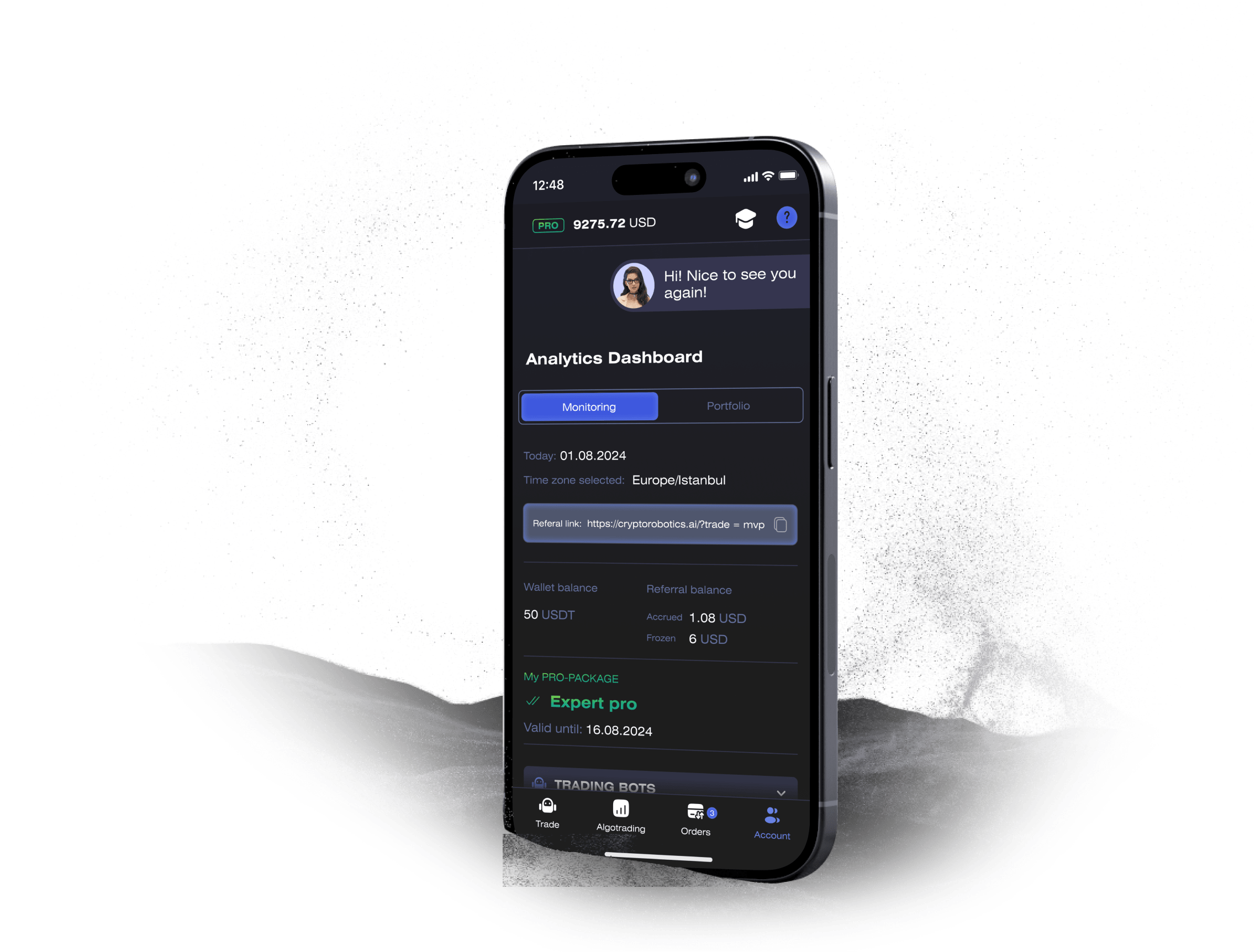
Access the full functionality of CryptoRobotics by downloading the trading app. This app allows you to manage and adjust your best directly from your smartphone or tablet.

News
See more