

Published: February 07, 2025 at 11:01 am
Updated on June 09, 2025 at 7:04 pm



The Ethereum Virtual Machine (EVM) has been the backbone of smart contracts and dApps, no doubt. But with the rise of platforms like Solana and Cardano, it’s worth taking a moment to consider where the EVM stands and what it might look like moving forward.
The EVM, in essence, is a Turing-complete computational environment. It runs the smart contracts that power Ethereum’s decentralized network. This infrastructure is not just a fancy term; it allows for secure execution of code, deployment of smart contracts in a platform-independent manner, and consistency in execution across nodes.
The EVM has a few defining characteristics. It guarantees deterministic execution, meaning every node processes transactions in the same way. It has robust isolation to keep contracts from messing with each other. Resource metering via gas limits the complexity of computations. And lastly, it employs a stack-based architecture to handle its computational states.
The EVM rose from Ethereum’s ambition to create a more adaptable blockchain. Its inception dates back to 2014, with the first implementation launching in 2015 alongside Ethereum’s mainnet. A major turning point was the DAO hack in 2016, which led to significant security enhancements. The period from 2020 to 2022 was marked by optimization and scalability efforts.
Here’s the kicker: The EVM has a tough time with scalability. Each node processes every transaction, leading to congestion and soaring transaction fees during high demand. This is where Solana shines, boasting over 50,000 TPS. The current EVM is “fairly slow” and operates on a single-threaded basis. This setup could result in rollups and issues with liquidity fragmentation.
When it comes to transaction speed, the EVM does not impress. With a mere 15 TPS, it lags behind Solana. Plus, the gas fees are higher, making it less appealing to users. This disparity could hinder the adoption of dApps on Ethereum.
The EVM is limited by gas limits, which can restrict computation complexity. Developers often find themselves optimizing their contracts to keep them efficient and affordable. The single-threaded architecture also limits parallelism, although there are discussions about incorporating parallelism to improve performance while keeping backward compatibility.
To tackle these challenges, several solutions are in the works.
Layer-2 solutions like Optimism and Arbitrum allow transactions to be processed off the main Ethereum blockchain. This means faster speeds and lower costs, but it also leads to liquidity fragmentation and a scattered user experience.
Parallelized Ethereum Virtual Machines (pEVMs) might be the answer. They allow multiple transactions to be processed at the same time, enhancing speed and efficiency. The goal is to optimize opcode execution by grouping independent transactions, thus lowering gas costs.
Future upgrades will also focus on making Ethereum resilient to emerging technologies, including quantum computing threats. The development team is working on integrating quantum-resistant algorithms.
The EVM has changed the game in blockchain technology, but it’s not without its flaws. Its challenges in scalability, speed, and costs compared with platforms like Solana and Cardano are significant. However, with innovative solutions like layer-2 rollups, pEVMs, and quantum resistance on the horizon, the EVM might just find its footing in this rapidly changing landscape.
Egor Romanov is an experienced crypto analyst, professional trader, and author of trading strategies and the Cryptorobotics blog, where he shares his knowledge about cryptocurrencies and financial markets.
Alina Tukaeva is a leading expert in the field of cryptocurrencies and FinTech, with extensive experience in business development and project management. Alina is created a training course for beginners in cryptocurrency.
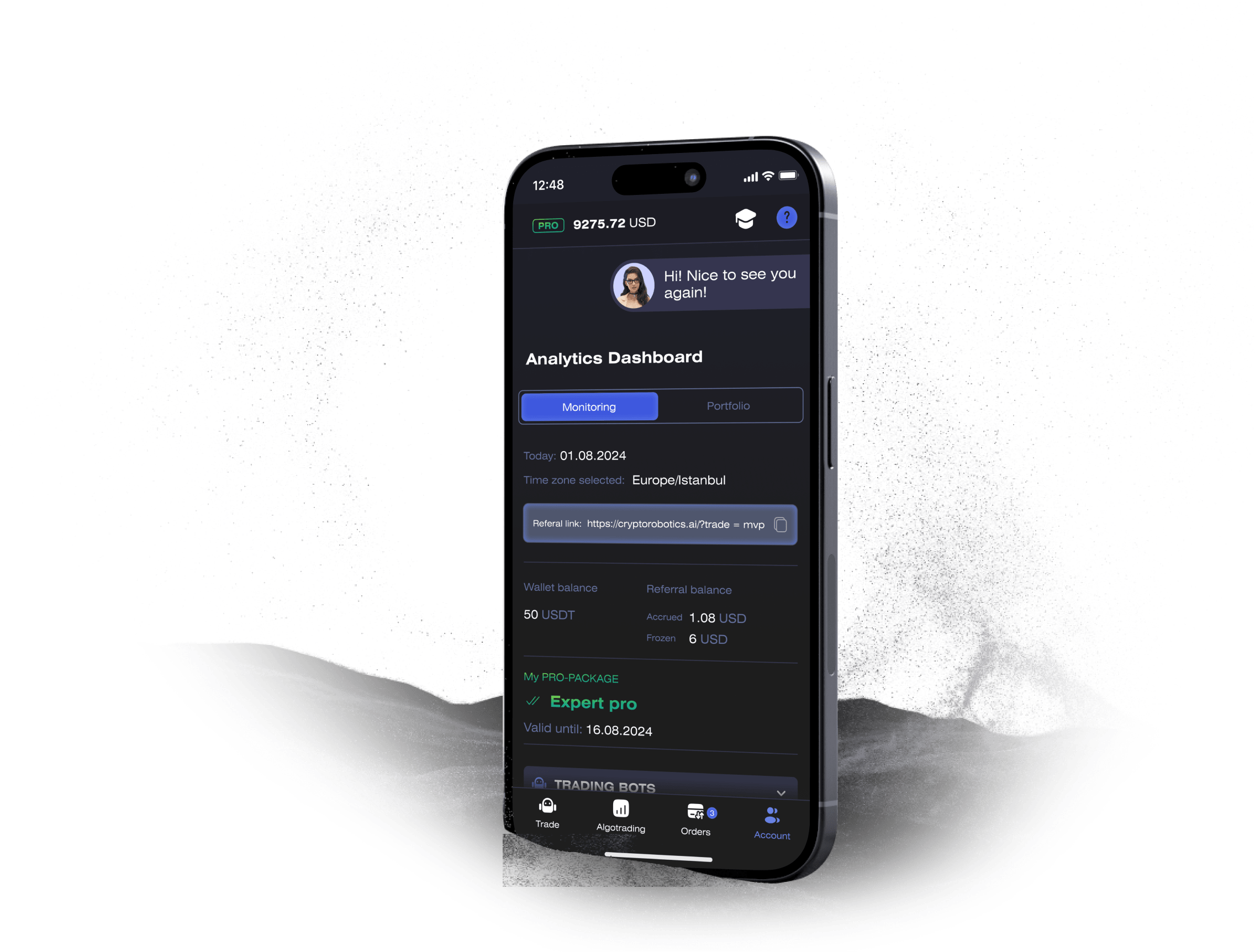
Access the full functionality of CryptoRobotics by downloading the trading app. This app allows you to manage and adjust your best directly from your smartphone or tablet.

News
See more



Blog
See more