

Published: March 03, 2025 at 9:10 am
Updated on June 09, 2025 at 7:07 pm



In the fast-paced world of cryptocurrency, AI trading tools are changing the game for rookie traders. They promise to improve decision-making and streamline processes, but they also come with their own risks. So, how do we harness the power of AI while keeping our instincts intact?
AI trading tools, like automated trading robots and crypto trading terminals, can really boost how new traders make decisions. These tools take charge of analyzing data and making choices, which helps to cut down on emotional influences. This allows traders to focus on learning instead of getting lost in complex strategies. For example, AI-powered platforms can sift through huge amounts of data in a flash, providing insights that would be hard to find manually. This makes trading strategies more consistent and rational, giving traders a better chance to make informed decisions.
Also, AI tools come packed with features like predictive analytics and risk management, which are super important for beginners. They can help spot good trading strategies and manage risks well, allowing new traders to navigate the tricky waters of Forex and cryptocurrency with more assurance. Plus, the added social sentiment insights can keep them ahead of the game.
But it’s not all sunshine and rainbows. Depending too much on AI insights in crypto trading can lead to problems. Traders might overlook important market shifts and end up making bad decisions if they don’t mix in some human consideration. For example, the lack of transparency in AI algorithms can lead to inaccuracies, especially if the algorithms are fed biased data. This “black box” issue makes it hard to grasp how AI arrives at its decisions, which can be a recipe for losses if there’s no human oversight.
Another concern is cybersecurity risks. AI systems can be targets for cyberattacks, putting traders’ funds at risk. So it’s necessary to have strong cybersecurity in place to protect against these threats and keep trading operations safe. Also, the rules around AI in crypto trading are always changing, so traders need to keep up with compliance to avoid legal headaches.
AI trading platforms could make trading more accessible by simplifying complex strategies and automating processes. But they might also create obstacles for people who aren’t as tech-savvy. Platforms like Binance offer free trading bots, but getting these tools set up usually requires a decent amount of tech know-how, which can scare off newbies.
If we want to make trading truly accessible, AI platforms should focus on user-friendly interfaces and educational resources that cater to everyone. Making AI tools easy to use and understand could empower a wider audience to dive into cryptocurrency trading without feeling daunted.
To get the most out of trading strategies, we need to blend AI automation with traditional trading instincts. The best traders will mix AI insights with their own judgment, taking advantage of both. For instance, while AI can spot trends and handle routine tasks, human intuition is vital for interpreting AI signals and adjusting strategies as the market changes.
Keeping a close watch on AI performance and tweaking strategies when necessary is crucial to stay in line with investment goals. By merging AI’s data-driven insights with human expertise, traders can boost their overall performance and make better decisions.
The future of cryptocurrency trading is all about blending AI tools and human intuition. AI trading platforms offer great benefits, but traders need to be aware of the risks that come with depending too much on technology. Striking a balance between automation and traditional trading instincts is key to navigating the complexities of the crypto market. As things continue to change, embracing both AI and human insight will be essential for success in cryptocurrency trading.
Egor Romanov is an experienced crypto analyst, professional trader, and author of trading strategies and the Cryptorobotics blog, where he shares his knowledge about cryptocurrencies and financial markets.
Alina Tukaeva is a leading expert in the field of cryptocurrencies and FinTech, with extensive experience in business development and project management. Alina is created a training course for beginners in cryptocurrency.
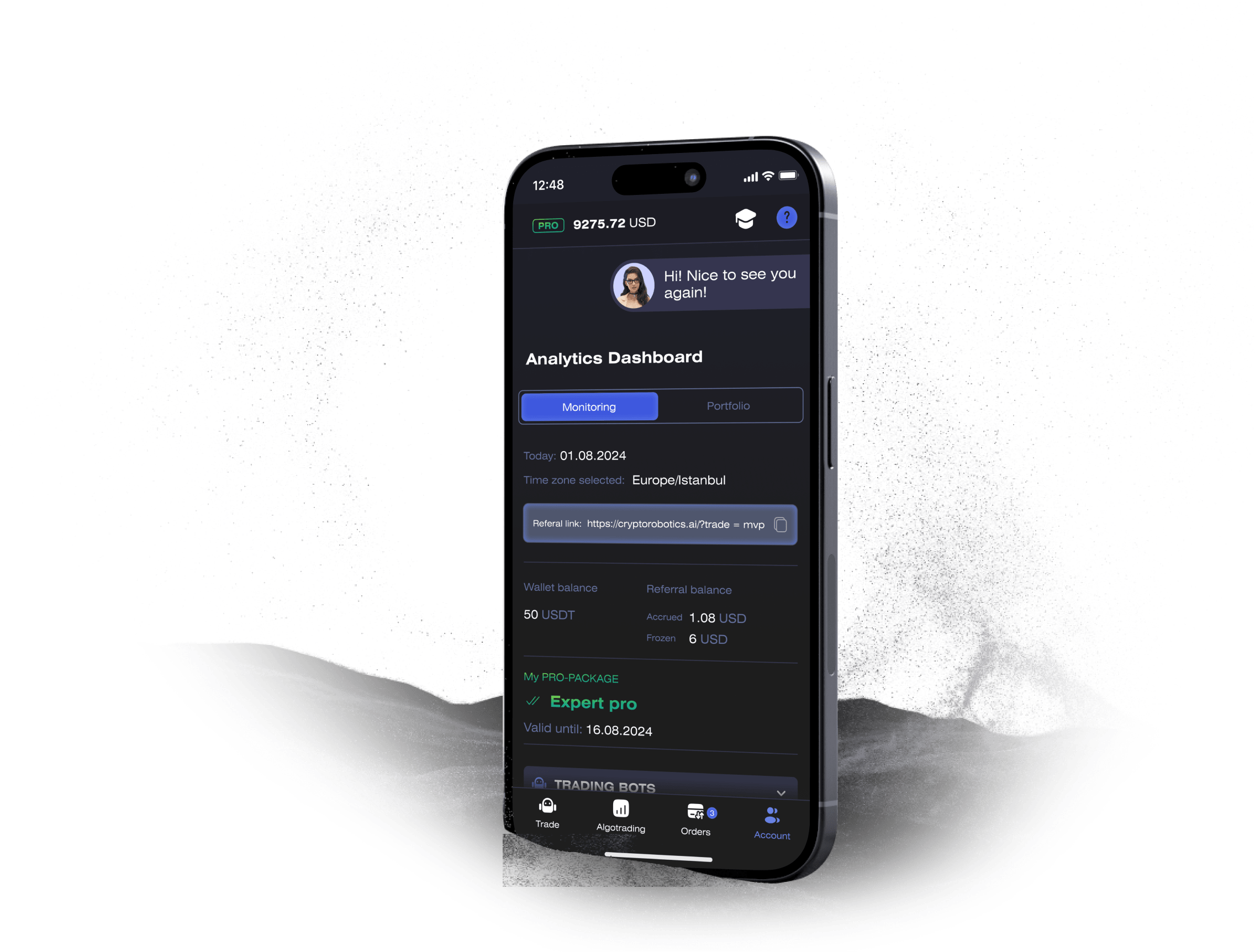
Access the full functionality of CryptoRobotics by downloading the trading app. This app allows you to manage and adjust your best directly from your smartphone or tablet.

News
See more



Blog
See more