Published: December 29, 2025 at 12:03 pm
Updated on December 29, 2025 at 12:18 pm

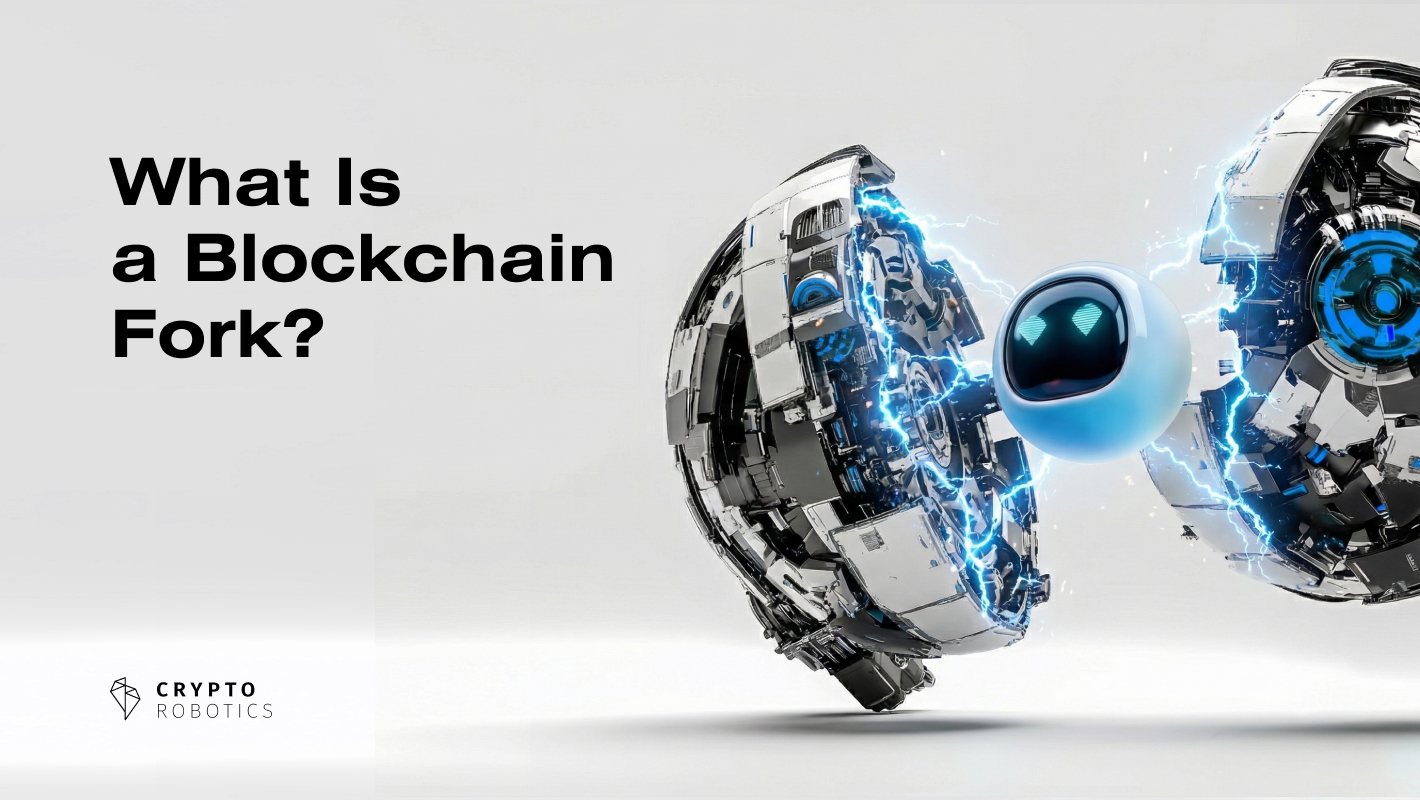


A blockchain fork might sound like a culinary term, but in decentralized technology, it’s one of the most pivotal concepts that determines how blockchains evolve, adapt, and sometimes diverge into entirely new ecosystems. At its core, a fork is a change or split in a blockchain’s protocol—a structured set of rules that defines how participants agree on the state of a distributed ledger. Forks can happen intentionally, as part of planned upgrades, or accidentally due to network timing. The result is either a smooth protocol transition or a permanent division into two parallel blockchains. Understanding forks and the key distinction between soft forks and hard forks is essential for anyone navigating blockchain governance, network security, and digital asset dynamics.
A blockchain fork occurs when there’s a divergence in the blockchain’s transaction history or protocol rules. Imagine the blockchain as a long, immutable record of blocks linked by consensus rules. When those rules are modified—whether slightly or significantly—participants must decide whether to adopt the update. If they don’t all agree, or if the change alters the rules in an incompatible way, the network can split into two versions of the chain.
Forks can be either temporary and accidental, such as when two miners find a block at nearly the same time, resulting in a temporary split that later reconciles; or intentional and protocol-driven, such as when developers or the community introduce new features, fix vulnerabilities, or implement strategic shifts in the blockchain’s functionality.
At the heart of every fork is the fact that blockchains are decentralized: no single entity has unilateral control to enforce changes. Instead, upgrades require coordination across a distributed network of nodes and stakeholders. When that coordination succeeds, it can lead to an orderly evolution of the blockchain. When it doesn’t, the network can permanently diverge.
A hard fork is a protocol change that is not backward-compatible. This means the updated rules that constitute the new version of the blockchain conflict with the rules that defined the old blockchain. As a result, nodes that do not upgrade to the new software can no longer validate blocks or participate in consensus under the updated protocol.
When a hard fork occurs, the blockchain splits into two separate networks that run in parallel. Each chain retains a shared history up to the fork point, but from that point forward they follow different rules and potentially diverge significantly in functionality, token economics, or governance mechanisms.
If the community collectively adopts the new rules, the fork might result in a single dominant chain. But if significant segments choose to continue on the old protocol, this leads to the creation of two coexisting blockchains. Each chain may have its own native token, community, development roadmap, and market valuation.
Hard forks often occur for major changes—such as scaling protocol parameters, implementing sweeping security revisions, or addressing critical bugs that can’t be resolved with backward-compatible updates. They can also result from governance disputes where consensus on the direction of the network breaks down.
Historical examples include notable splits like the creation of Bitcoin Cash from Bitcoin and Ethereum Classic from Ethereum—each born out of differing community perspectives on how the blockchain should evolve.
A soft fork is a backward-compatible protocol change. In technical terms, the updated rules are a subset of the old rules. This means that nodes that upgrade to the new protocol can enforce the new rules, while older nodes that haven’t upgraded can continue validating new blocks as long as they conform to both old and new rules.
Soft forks introduce restrictions rather than expansions. When implemented correctly, they ensure that new blocks created under the updated rules remain recognizable as valid by nodes running older versions of the software. This backward compatibility means that a network split is far less likely.
Because soft forks don’t require every network participant to update immediately, they are often considered less disruptive than hard forks. They allow the network to adopt improvements gradually and maintain continuity without fracturing the blockchain into separate versions.
For a soft fork to be successful, however, a significant portion of the network—often measured by hash rate or stake depending on the consensus mechanism—must enforce the new rules. If only a minority enforces the changes, those new rules might not gain traction, and the fork could fail or result in unintended consequences.
Both soft forks and hard forks are mechanisms for evolving blockchain protocols, but they differ substantially in implications, technical requirements, and outcomes.
Blockchain protocols are decentralized and open-source. This means that upgrades, fixes, and enhancements can’t be enforced by a single entity; they must be introduced, agreed upon, and adopted by the community of developers, node operators, miners or validators, and other stakeholders. Forks are the practical tools through which these coordinated changes occur.
In many cases, forks are proactive and planned—designed to enhance performance, introduce smart contract capabilities, improve security, or refine incentive structures. In such scenarios, soft forks are often preferred where backward compatibility is essential, while hard forks are chosen when protocol transformations are so fundamental that backward compatibility is infeasible.
Sometimes, forks stem not from technical needs but from philosophical or economic disagreements within a community. When participants diverge on priorities—such as scaling approaches, monetary policy, or governance models—hard forks enable factions to pursue different visions while sharing a common history up to the divergence point.
Forks, particularly hard forks, carry practical risks beyond technical implementation. For instance, a split can dilute hashing or staking power if resources are divided between chains, potentially weakening security against attacks such as 51% attacks. Divergent chains may also confuse users or fragment liquidity across markets.
Soft forks, while generally less disruptive, still risk introducing errors if new rules are not fully vetted or if the transitional enforcement is uneven. Because soft forks tighten rules, they can occasionally render previously valid transactions invalid if not properly coordinated, stressing the importance of thorough testing and signaling mechanisms during deployment.
Governance models also influence fork dynamics. Chains with robust decision-making frameworks and clear upgrade pathways tend to manage forks more smoothly than those without structured mechanisms, reducing the likelihood of contentious splits or network uncertainty.
Blockchain forks are more than technical upgrades—they are expressions of decentralized governance, community consensus, and technological evolution. They enable networks to grow, adapt, and innovate, but also introduce challenges in coordination, security, and continuity. Soft forks offer backward-compatible improvements that retain network cohesion, while hard forks enable significant transformations that can result in two distinct blockchain paths. Both are essential mechanisms in the life cycle of decentralized protocols, shaping how blockchains evolve over time and how communities navigate change.
Understanding forks empowers participants—from developers to investors—to read the dynamics of blockchain governance, assess risks, and anticipate the implications of protocol upgrades that can redefine the landscape of digital assets and distributed systems.
Alina Garaeva: a crypto trader, blog author, and head of support at Cryptorobotics. Expert in trading and training.
Alina Tukaeva is a leading expert in the field of cryptocurrencies and FinTech, with extensive experience in business development and project management. Alina is created a training course for beginners in cryptocurrency.
Related Topics




Access the full functionality of CryptoRobotics by downloading the trading app. This app allows you to manage and adjust your best directly from your smartphone or tablet.


News
See more



Blog
See more