

Published: January 27, 2026 at 1:32 pm
Updated on January 27, 2026 at 1:39 pm

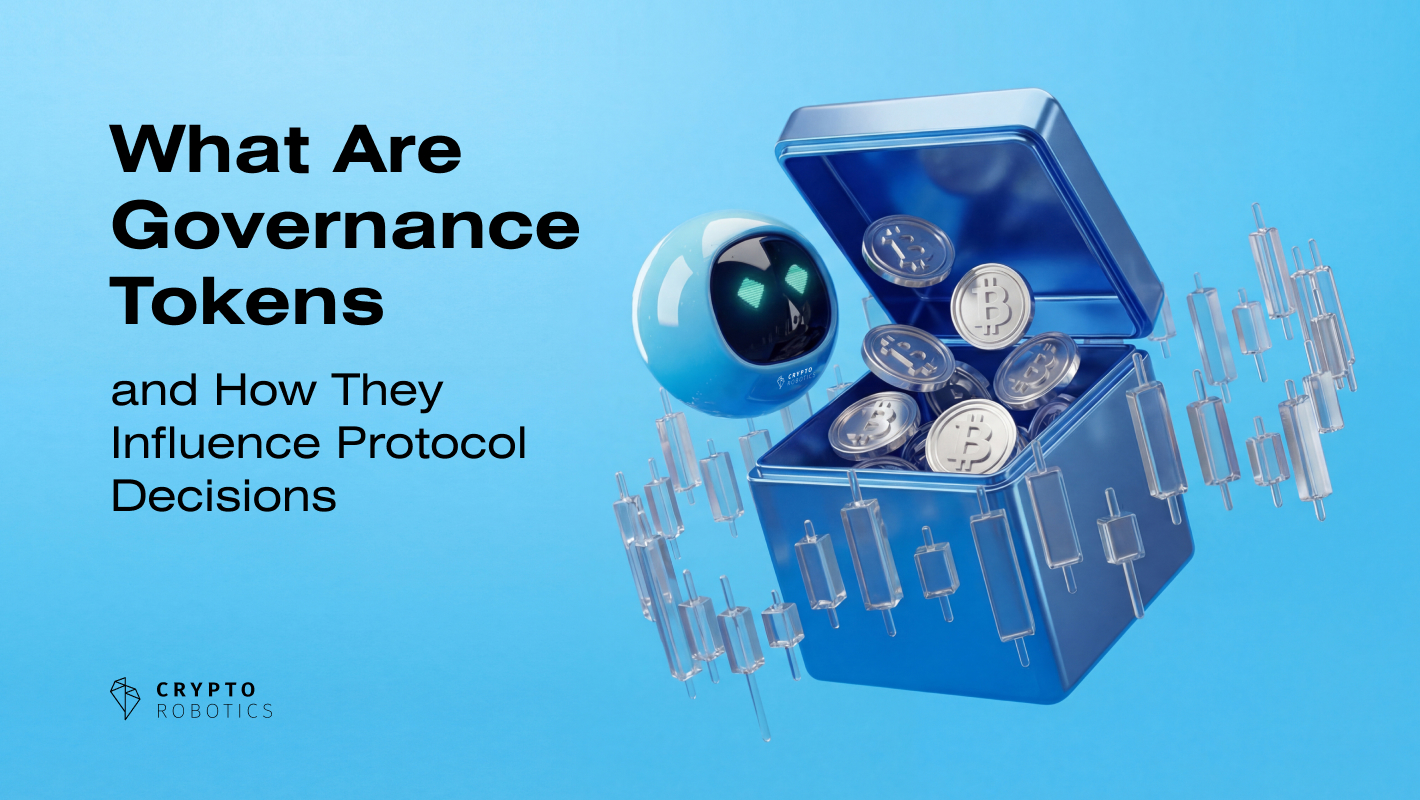


Governance tokens are one of the most distinctive innovations introduced by decentralized finance and blockchain-based protocols. They transform users from passive participants into active decision-makers, enabling communities to collectively shape the future of decentralized systems without relying on centralized management.
While governance tokens are often discussed in terms of voting rights, their real impact goes far beyond simple proposal approval. They influence economic parameters, security assumptions, treasury management, and even the long-term survivability of a protocol. At the same time, poorly designed governance systems can lead to voter apathy, power concentration, and decisions that undermine sustainability.
This article provides a detailed, professional explanation of what governance tokens are, how they work, and how they influence protocol decisions in practice. The focus is on governance as an economic and coordination mechanism, not just a technical feature.
A governance token is a cryptocurrency that grants its holder the right to participate in decision-making processes within a decentralized protocol. These decisions are typically executed through on-chain or off-chain voting mechanisms and can directly affect how the protocol operates.
Governance tokens do not usually represent legal ownership or equity. Instead, they confer control over protocol rules, parameters, and resource allocation.
In essence, governance tokens convert economic stake into political power within a decentralized system.
In the absence of a central authority, protocols need a way to make collective decisions. Governance tokens provide a formalized structure for coordinating thousands of independent participants.
They enable decentralized systems to evolve without relying on a founding team to unilaterally dictate changes.
Governance tokens are typically distributed to users, contributors, and investors who have a direct economic interest in the protocol’s success. This creates an incentive for voters to make decisions that enhance long-term value rather than short-term gains.
When governance works as intended, those who benefit most from a protocol’s growth also bear responsibility for its direction.
Blockchain protocols are not static. Market conditions change, security risks emerge, and new opportunities arise. Governance tokens allow protocols to adjust parameters, deploy upgrades, and reallocate resources without hard forks or centralized intervention.
This flexibility is critical for long-term sustainability.
Governance tokens typically grant voting power proportional to the number of tokens held or staked. The more tokens a participant controls, the greater their influence on outcomes.
Voting power may be:
Each model has implications for decentralization and fairness.
Most governance systems require a minimum token threshold to submit proposals. This prevents spam and ensures that proposals come from economically committed participants.
Proposals may include:
Once submitted, proposals typically enter a discussion phase before voting begins.
Governance can be executed in different ways.
On-chain governance
Votes are recorded and executed directly on the blockchain. Successful proposals automatically trigger changes via smart contracts.
Off-chain governance
Voting occurs through signaling mechanisms, and execution is handled manually or by a multisignature group.
On-chain governance offers automation and transparency, while off-chain governance provides flexibility and lower costs. Many protocols combine both approaches.
One of the most important roles of governance is controlling economic variables, such as:
Poorly calibrated economic decisions can destabilize a protocol, making governance quality a critical sustainability factor.
Many protocols control large treasuries funded by token issuance or protocol revenue. Governance token holders often decide:
Treasury decisions have long-term consequences and require financial discipline.
Governance tokens influence technical evolution by approving upgrades, integrations, and architectural changes.
This includes:
Governance ensures that upgrades reflect community consensus rather than unilateral control.
Liquidity mining, staking rewards, and ecosystem incentives are frequently governed by token holders.
Governance determines:
Incentive mismanagement is one of the most common causes of long-term protocol failure.
Governance rights add a layer of functional utility to tokens. Holders are not only speculating on price but also influencing how the protocol evolves.
This utility can support long-term holding behavior, particularly for participants who are deeply integrated into the ecosystem.
Effective governance can increase protocol value by:
Conversely, dysfunctional governance can destroy value regardless of technical quality.
Not all token holders have the time or expertise to evaluate proposals. Delegation allows holders to assign voting power to representatives who specialize in governance analysis.
Delegation improves participation rates and decision quality when implemented transparently.
Low voter turnout is a persistent issue in governance systems. When only a small fraction of tokens participate in voting, decisions may not reflect the broader community’s interests.
Low participation increases the risk of:
Healthy governance requires active engagement, not just formal mechanisms.
Because voting power is often proportional to token holdings, large holders can exert disproportionate influence. This can lead to outcomes that favor capital concentration over ecosystem health.
Governance systems must balance economic stake with safeguards against excessive control.
Governance capture occurs when a small group consistently controls outcomes, either through token accumulation or coordinated voting.
Once capture occurs, protocols often lose credibility, user trust, and long-term resilience.
Governance tokens can be exploited if attackers accumulate enough voting power to pass malicious proposals, such as draining treasuries or weakening security parameters.
Robust governance systems mitigate this risk through:
Security and governance are deeply interconnected.
While fast governance sounds attractive, slow decision-making can be a security advantage. Delays allow time for community review, risk assessment, and response to malicious actions.
Sustainable governance favors deliberation over speed.
Governance tokens are often marketed as tools of decentralization, but decentralization exists on a spectrum.
Key questions include:
True decentralization requires more than token-based voting; it requires social coordination and accountability.
Several misconceptions frequently appear in market narratives:
In reality, governance effectiveness depends on structure, culture, and incentives, not just token mechanics.
A professional evaluation of governance tokens should consider:
Strong governance systems demonstrate consistency, accountability, and long-term orientation.
During bull markets, governance activity often increases as protocols expand, deploy incentives, and fund growth initiatives. However, speculative participation can distort priorities.
Bear markets test governance resilience. Hard decisions around spending, emissions, and restructuring reveal whether governance serves long-term sustainability or short-term interests.
Protocols that survive downturns often have disciplined governance cultures.
Governance tokens are a powerful but imperfect tool for decentralized decision-making. At their best, they align incentives, distribute control, and enable protocols to adapt responsibly over time. At their worst, they concentrate power, enable exploitation, and create the illusion of decentralization without substance.
Understanding governance tokens requires looking beyond voting interfaces and proposal counts. The real question is whether governance produces economically sound, security-aware, and sustainable decisions.
In decentralized systems, governance is not just about who votes—it is about how decisions are made, who bears the consequences, and whether the system can evolve without losing its integrity. When governance tokens fulfill that role, they become one of the most meaningful innovations in the crypto ecosystem.
Alina Garaeva: a crypto trader, blog author, and head of support at Cryptorobotics. Expert in trading and training.
Alina Tukaeva is a leading expert in the field of cryptocurrencies and FinTech, with extensive experience in business development and project management. Alina is created a training course for beginners in cryptocurrency.
Related Topics






Access the full functionality of CryptoRobotics by downloading the trading app. This app allows you to manage and adjust your best directly from your smartphone or tablet.


News
See more



Blog
See more