

Published: February 02, 2026 at 1:51 pm
Updated on February 02, 2026 at 2:03 pm



Decentralized insurance has emerged as one of the most important risk-mitigation layers within the Web3 ecosystem. As decentralized finance (DeFi), blockchain protocols, and smart contracts continue to manage billions of dollars in on-chain value, the absence of traditional legal protections has created a structural demand for alternative insurance models. Web3 insurance aims to address this gap by replacing centralized insurers with transparent, community-driven, and algorithmically governed systems.
This article provides a comprehensive explanation of how decentralized insurance works, why it exists, its core models, benefits, limitations, and its role in the future of blockchain-based financial infrastructure.
In traditional finance, insurance is deeply integrated into the system. Banks, custodians, and exchanges operate under regulatory frameworks that mandate capital reserves, consumer protection rules, and legal accountability. When something goes wrong, liability is clearly defined.
Web3 operates under a different paradigm.
Decentralized applications are:
This architecture removes intermediaries but also eliminates many traditional safeguards. Smart contract bugs, oracle failures, governance attacks, and protocol exploits can result in immediate and irreversible losses.
Decentralized insurance exists to provide economic protection where legal recourse is limited or nonexistent.
Decentralized insurance is an on-chain risk-sharing mechanism that allows users to collectively pool capital and compensate participants when predefined adverse events occur. Instead of relying on a centralized insurance company, decentralized insurance protocols use smart contracts, tokenized incentives, and community governance to underwrite and settle claims.
In essence, users insure each other.
Coverage conditions, premium pricing, claims assessment, and payouts are enforced by code and governed by token holders or staked participants.
The distinction between traditional insurance and Web3 insurance is structural rather than cosmetic.
Traditional insurance relies on:
Decentralized insurance relies on:
There is no single insurer. Instead, risk is distributed across participants who are economically incentivized to behave honestly.
While implementations differ across protocols, most decentralized insurance platforms follow a similar operational flow.
First, a capital pool is created. Liquidity providers deposit funds into a smart contract and earn yield in exchange for underwriting risk. These funds are used to pay claims.
Second, users purchase coverage. Coverage is typically linked to a specific smart contract, protocol, or event. The user pays a premium, which is calculated algorithmically based on risk parameters and available liquidity.
Third, a claim event occurs. If a predefined condition is met (for example, a protocol hack or smart contract failure), the insured user submits a claim.
Finally, the claim is validated and paid out. Validation can occur through token-holder voting, expert assessors, automated oracle data, or hybrid systems. If approved, funds are released from the pool.
Decentralized insurance does not aim to replicate all forms of traditional insurance. Instead, it focuses on risks unique to blockchain systems.
The most common coverage categories include:
One of the most complex aspects of decentralized insurance is claim validation. Without courts or regulators, protocols must rely on alternative mechanisms.
The most common models include:
Several projects have pioneered decentralized insurance and shaped the sector’s design patterns.
Nexus Mutual is one of the earliest and most established platforms, focusing on smart contract and protocol risk. It uses member voting to assess claims and operates with a mutual-style capital pool.
Etherisc focuses on building infrastructure for decentralized insurance products, including parametric insurance models that automate payouts based on objective data.
InsurAce offers cross-chain coverage for DeFi protocols, exchanges, and stablecoins, with capital efficiency mechanisms and reinsurance layers.
These protocols demonstrate that decentralized insurance can operate at scale, though each makes different trade-offs between decentralization, speed, and governance complexity.
Decentralized insurance offers several structural advantages over traditional models.
Despite its promise, decentralized insurance is not without challenges.
For Web3 to achieve mainstream adoption, users must feel that risks are manageable. Decentralized insurance plays a critical role in this transition.
Institutional participants require predictable risk frameworks. Retail users need confidence that catastrophic losses are not inevitable. Developers benefit from insurance-backed protocols that increase user trust.
In this sense, decentralized insurance is not a peripheral service. It is foundational infrastructure that supports the broader Web3 economy.
The sector continues to evolve rapidly.
Parametric insurance models are gaining traction, enabling instant payouts triggered by objective on-chain or off-chain data.
Reinsurance layers are emerging, allowing insurance protocols to hedge their own risk exposure.
Cross-chain coverage is becoming essential as assets move freely between ecosystems.
Integration with risk analytics and on-chain monitoring tools is improving premium accuracy and capital efficiency.
Over time, decentralized insurance is likely to converge with traditional actuarial science, creating hybrid models that combine cryptographic transparency with advanced risk modeling.
Decentralized insurance addresses one of Web3’s most fundamental weaknesses: unmanaged risk. By replacing centralized insurers with transparent, incentive-driven systems, it provides a native solution aligned with blockchain’s core principles.
While the sector still faces governance, regulatory, and technical challenges, its trajectory is clear. As DeFi, Web3 infrastructure, and on-chain assets continue to grow, decentralized insurance will move from an optional add-on to a necessary layer of the decentralized stack.
Understanding how these systems work is essential for investors, developers, and platforms building in the Web3 economy.
Alina Garaeva: a crypto trader, blog author, and head of support at Cryptorobotics. Expert in trading and training.
Alina Tukaeva is a leading expert in the field of cryptocurrencies and FinTech, with extensive experience in business development and project management. Alina is created a training course for beginners in cryptocurrency.
Related Topics





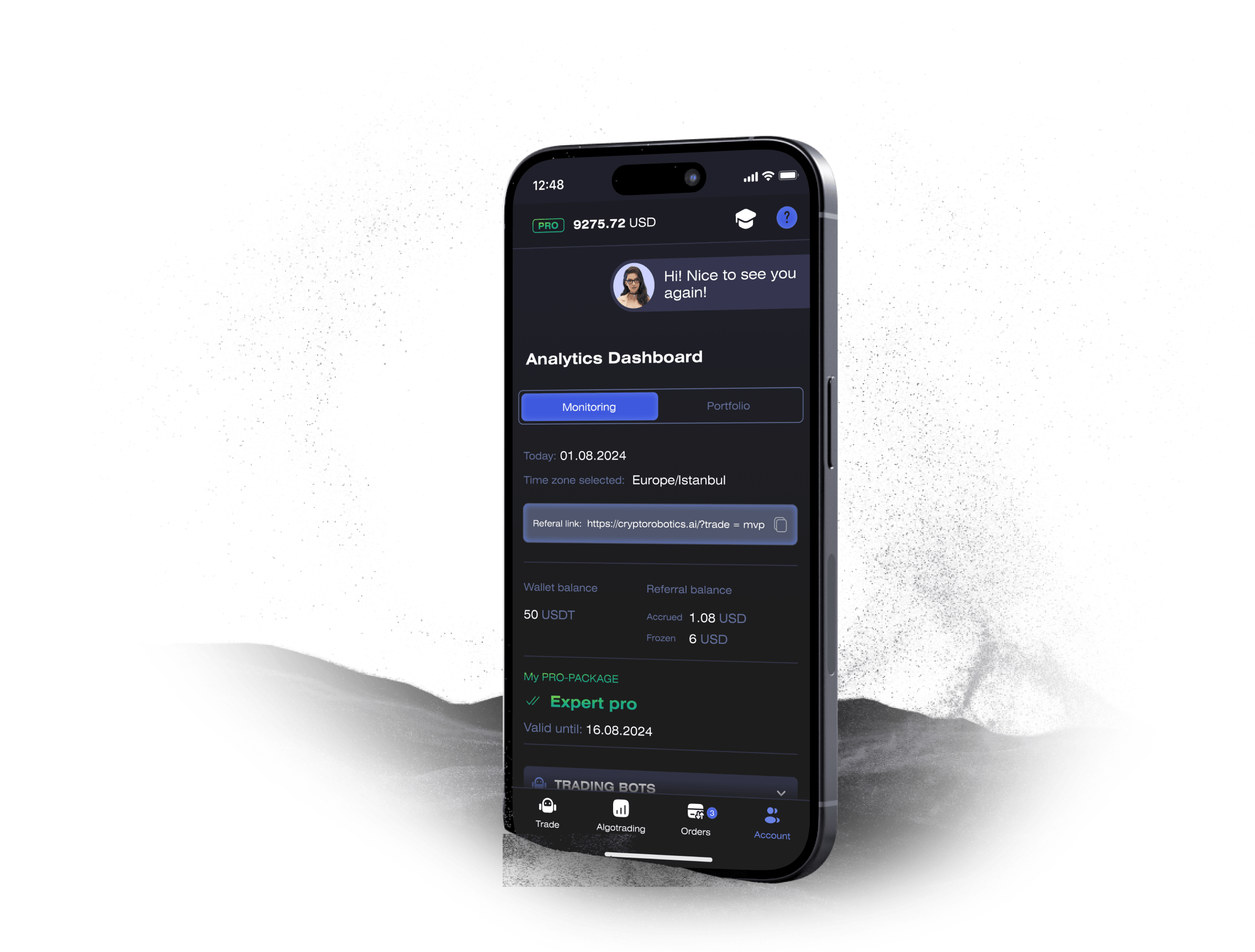
Access the full functionality of CryptoRobotics by downloading the trading app. This app allows you to manage and adjust your best directly from your smartphone or tablet.

News
See more



Blog
See more