Published: December 02, 2025 at 1:54 pm
Updated on December 02, 2025 at 1:54 pm

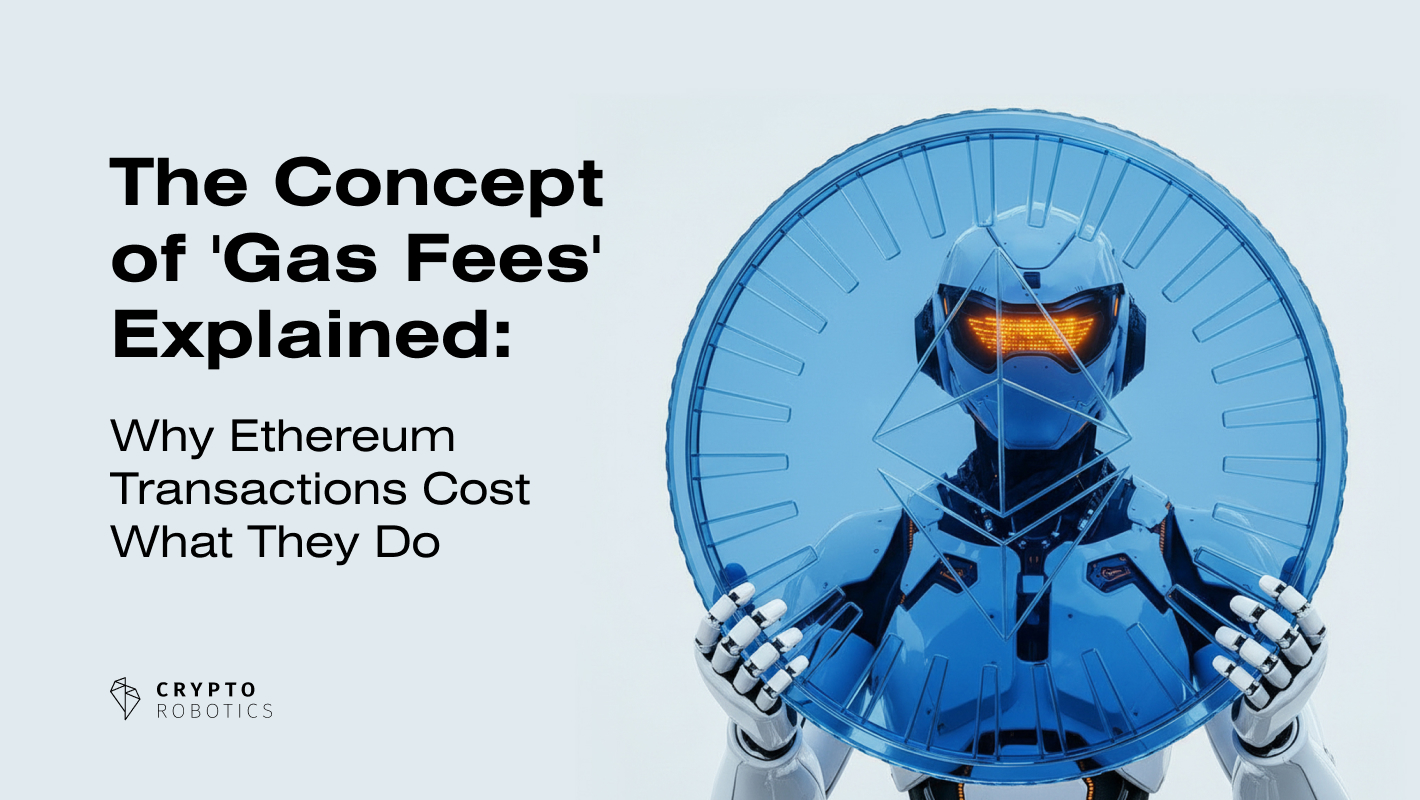


Imagine you’re trying to send a gold bar across a city during rush hour. You hire a courier, but you need to pay not only for their labor but also for the fuel for their vehicle. The worse the traffic, the more expensive the fuel, and the higher the premium you’ll need to pay the courier to get ahead of others. This analogy perfectly captures the essence of “gas fees” on the Ethereum network—the “fuel” that powers every action on this global, decentralized computer.
Gas is not merely a fee; it is a fundamental economic mechanism that ensures the network’s security, predictability, and functionality. Understanding how it works is key to understanding the very philosophy of Ethereum.
Let’s start with the basics. Gas is a unit of measurement for the computational effort required to perform a specific operation on the Ethereum network. Every action, from a simple native ETH transfer to executing a smart contract, minting an NFT, or swapping tokens on a decentralized exchange (DEX), requires a certain amount of processing power from thousands of computers (nodes) around the world.
Think of it like paying for electricity. You don’t pay for “having light,” but for the kilowatt-hours your bulb consumes. Similarly, on Ethereum, you pay not for the transaction itself, but for the gas (computational work) that the transaction consumes.
Gas has two key components:
The total fee was traditionally calculated as: Gas Limit * Gas Price.
Setting the gas limit too low could cause the transaction to fail (you’d still pay for the computation up to the point of failure). Setting the gas price too low meant miners (now validators) would ignore your transaction, leaving it pending for hours or days.
Before August 2021, the system was a blind, first-price auction. Users guessed the minimum viable gas price, leading to inefficiency and frequent overpaying.
The EIP-1559 upgrade fundamentally reformed this model, introducing a more predictable and economically sound system. Now, the fee structure has two main parts:
Therefore, the post-EIP-1559 formula is:
Max Fee per Gas = Base Fee + Priority Fee
Total Max Cost = Gas Limit * (Base Fee + Priority Fee)
Your wallet automatically suggests a Base Fee, and you decide on the Priority Fee. If the Max Fee you set is higher than the actual Base Fee, you only pay the Base Fee + your Priority Fee, and the remainder is refunded. This eliminates much of the guesswork.
The price of gas is a pure, global result of supply and demand.
High gas fees are Ethereum’s primary growing pain, but they are also the primary driver of innovation. The future lies in scalability, and there are two main paths:
Gas fees are not an unfortunate byproduct; they are a cornerstone of Ethereum’s economic security. They protect the network from spam attacks, fairly allocate a scarce resource (block space), and reward the participants who secure the network.
By understanding the structure of gas—its limit, its base fee, and its priority fee—you cease to be a user who just “pays too much for a transfer.” You become a participant in a complex economic game, able to strategize: waiting for network lulls for non-urgent transfers, adding a high tip for time-sensitive deals, or migrating to L2 ecosystems for daily use.
Ethereum is evolving from a monolithic chain into a complex, layered ecosystem. In this new architecture, gas will remain its vital fuel, but its cost will cease to be a barrier, transforming into a fair price for access to a global, decentralized, and boundless computational power.
Alina Garaeva: a crypto trader, blog author, and head of support at Cryptorobotics. Expert in trading and training.
Alina Tukaeva is a leading expert in the field of cryptocurrencies and FinTech, with extensive experience in business development and project management. Alina is created a training course for beginners in cryptocurrency.
Related Topics





Access the full functionality of CryptoRobotics by downloading the trading app. This app allows you to manage and adjust your best directly from your smartphone or tablet.


News
See more



Blog
See more