


Published: December 29, 2025 at 2:15 pm
Updated on December 29, 2025 at 2:32 pm




Smart contracts are one of the defining innovations of blockchain technology—digital programs that run autonomously and enforce agreements without trusted intermediaries. They power decentralized finance (DeFi), token standards, decentralized applications (DApps), NFT marketplaces, and more. Yet beneath this simplicity lies a surprisingly intricate process: smart contracts do not simply “run like apps” on regular servers. Instead, they interact with blockchain architecture, virtual machines, consensus systems, transaction pools, gas metering, and cryptographic storage. This article provides a technical walkthrough of how smart contracts actually execute on a blockchain, from code creation to on-chain execution and final state updates.
Understanding this execution pipeline helps developers architect efficient, secure contracts and enables readers to appreciate the interplay between distributed systems and automated logic. The core example in this walkthrough is Ethereum-style execution, since it remains the most widely deployed smart contract execution environment, but many principles apply broadly to other smart contract platforms.
A smart contract is essentially a program stored on a blockchain that automatically executes predetermined actions when triggered by transactions meeting certain conditions. Unlike traditional legal contracts that require human enforcement, smart contracts enforce terms through code and the blockchain’s consensus machinery.
On platforms like Ethereum, smart contracts are written in languages such as Solidity, compiled into low-level bytecode, and deployed to the blockchain. Once deployed, they have a unique address and can receive and respond to transactions sent by users or other contracts.
The first step in smart contract execution begins off-chain with source code. Contracts are written in high-level languages (e.g., Solidity), which provide expressive syntax, data structures, control flow, and special constructs for blockchain use.
During compilation, this human-readable source transforms into bytecode — a sequence of instructions that a blockchain’s virtual machine can interpret. On Ethereum, this is the Ethereum Virtual Machine (EVM) bytecode. This bytecode is deterministic and optimized for predictable execution costs.
Importantly, this compilation stage also produces an ABI (Application Binary Interface), which defines how external calls map to functions and data types in the contract. Without the ABI, transactions wouldn’t know how to encode or decode function calls and parameters.
Once compiled, the bytecode must be deployed to the blockchain. This occurs through a special type of transaction that includes:
Deployment is just another transaction from the blockchain’s perspective. When a block producer (e.g., a miner or validator) includes this deployment transaction in a block and the block is finalized, the contract becomes part of the blockchain’s permanent state. A unique contract address is assigned, and the bytecode resides there permanently.
At this point, the contract is immutable: its code cannot change after deployment. To “update” logic, developers typically deploy a new contract and migrate state or use upgradeable proxy patterns.
Smart contracts do nothing until they are called by a transaction. Users (or other contracts) send transactions to the contract’s address, specifying:
These transactions are broadcast to the peer-to-peer network and enter a transaction pool where they await inclusion in a block by a validator or miner.
The inclusion of a transaction triggers the next phase: validation and execution.
Once embedded in a block, the smart contract invocation enters the blockchain’s execution environment — on Ethereum this is the EVM. The EVM functions like a deterministic stack-based virtual machine; it interprets bytecode in a controlled, sandboxed context. The contract execution proceeds according to the following aspects:
State Access: Smart contracts have state variables stored on-chain. The EVM reads and writes these using specific opcodes. Because every node must reach the same result, the execution must be fully deterministic.
Gas Metering: Each opcode executed by the EVM consumes gas, a measure of computational effort. The transaction specifies a gas limit. If execution runs out of gas mid-execution, the contract reverts: state changes are undone, but the gas spent is not refunded because work was done. This protects against infinite loops and abuse.
Memory and Storage: Contracts have two distinct memory layers. Memory is ephemeral and exists only during the execution of a transaction, whereas storage is persistent and part of the blockchain’s state. Reads and writes to storage are expensive in gas terms because they affect long-term state.
Call Stack and Opcodes: EVM bytecode consists of a range of operations — from arithmetic and logical instructions to conditional jumps and external calls. Every step updates the stack, memory, and possibly persistent state.
This process must be repeated by every full node as part of block validation; validators must re-execute all transactions to ensure the state transitions are correct before they accept the block. This redundancy is part of how decentralized consensus secures the network.
Smart contract execution does not conclude simply when the EVM completes the bytecode. A blockchain’s consensus algorithm (such as Proof of Stake on Ethereum) takes over to confirm that a block containing the executed transaction is valid and agreed upon by the network. Once finalized, the state changes — including token transfers, storage updates, event logs, or triggered chain reactions calling other contracts — become part of the canonical ledger.
This consensus step is critical: it ensures that even if some nodes are offline, misconfigured, or malicious, the network as a whole maintains a consistent state across all participants.
Inside a contract, functions may return values, emit events, or trigger further calls to other contracts.
Both return values and events provide ways for off-chain services (wallets, interfaces, analytics tools) to interpret and respond to contract execution without re-executing bytecode.
Smart contracts operate within the deterministic world of blockchains. For many real-world applications — such as price feeds, weather data, or legal deadlines — they need external data sources. This is achieved through oracles like Chainlink, which securely fetch and deliver data to contracts on-chain. These oracles sign and transmit verified data, enabling contracts to base decisions on inputs outside the blockchain itself.
Without oracles, smart contracts can only respond to on-chain events, which would limit their applicability in real-world workflows.
Smart contracts must handle errors and unexpected conditions. In EVM environments:
Robust execution therefore blends careful logic with gas awareness to prevent exploits and ensure predictable outcomes.
Once deployed, a smart contract’s code is immutable — it cannot be edited. This immutability contributes to trust and security, but also requires careful design and testing. To upgrade logic, developers use patterns like proxy contracts where the proxy delegates calls to upgradable implementation contracts. While not part of basic execution, these patterns affect how developers think about execution lifecycle and state continuity.
Smart contracts execute through a coordinated pipeline that begins with code and ends with on-chain state changes verified by decentralized consensus. The lifecycle includes:
Through this process, smart contracts fulfill their promise: autonomous, trustless, transparent execution anchored in decentralized systems. Behind every automated transfer, condition check, or event emission is a sequence of well-defined steps orchestrated by the blockchain architecture itself.
Understanding these mechanics not only helps developers build better contracts but also equips users and architects with insights into performance, security, and cost considerations — all central to mastering blockchain-based automation.
Alina Garaeva: a crypto trader, blog author, and head of support at Cryptorobotics. Expert in trading and training.
Alina Tukaeva is a leading expert in the field of cryptocurrencies and FinTech, with extensive experience in business development and project management. Alina is created a training course for beginners in cryptocurrency.
Related Topics






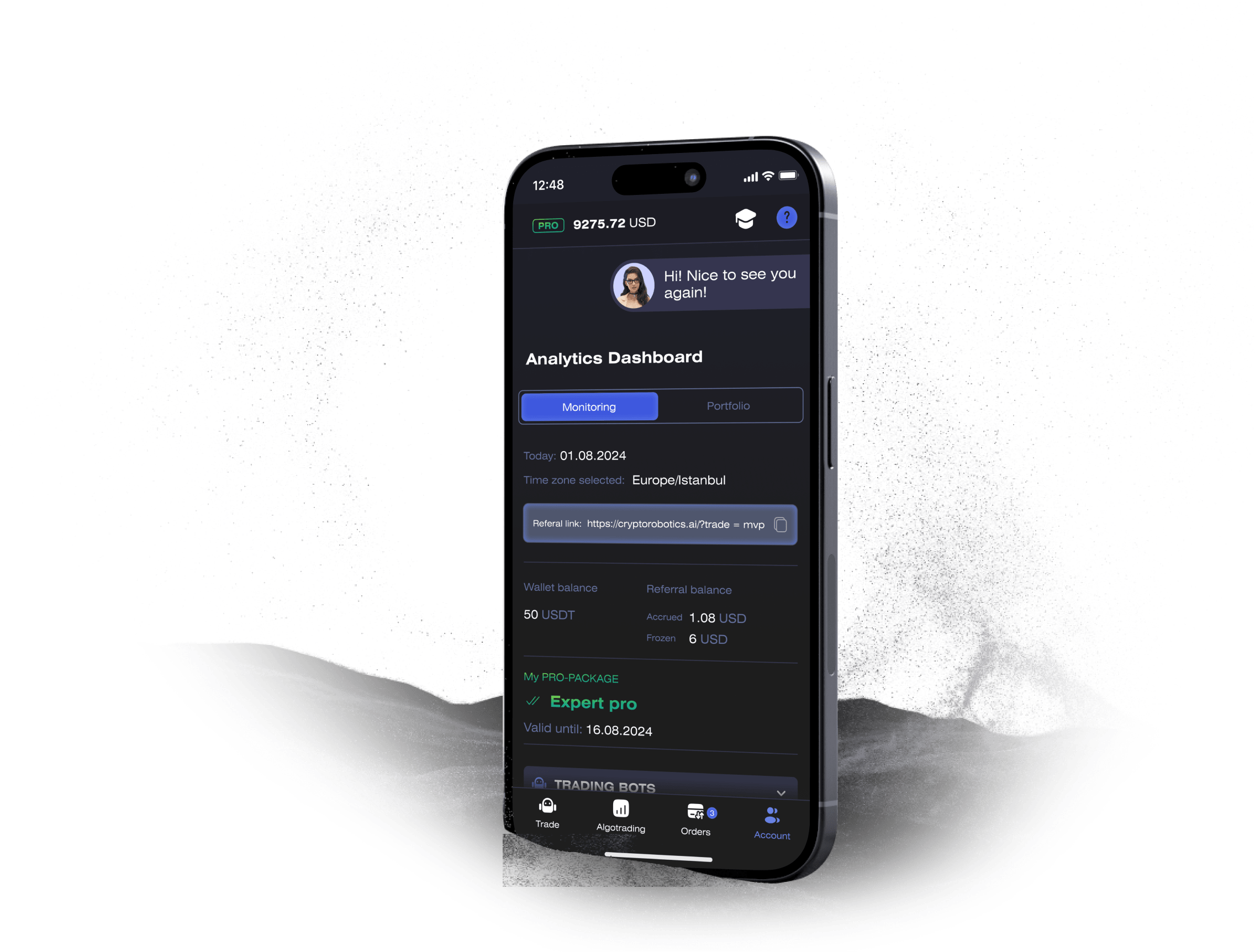
Access the full functionality of CryptoRobotics by downloading the trading app. This app allows you to manage and adjust your best directly from your smartphone or tablet.

News
See more



Blog
See more